

Wednesday, March 14th., 2018
Luckily for the Globe and the Humanity, The Empire lost its true grasp of power by the 2016 US presidential elections' unexpected H.R.C. loss!
That, so unpredictable for them Trump's uppercut blow, shook the ground below their feet!This shaken away space they are desperately now trying to recover by boosting up, in Galactic true history and Universe's evolution, the involvement capacity of the two other Empire's ladies....
The American people and the rest of the world have awakened enough to the fact that the Soros' Open Societies Funds, that gave birth to so many false flags, uprisings , social unrests of all sorts and colours and terrorism results, are not swallowed by the people as gullibly as till now.Thanks to the alternative media!
So, now, they look like they might have thought to perhaps introduce the same false-flaggy attitude to the international politics and diplomacy terrain.
Instead of the stadiums, the train stations, the skyscrapers, the schools, the music theatres and the 'populace' , now we have highly sophisticated singled out cases, where the drama can originally be staged . Then, it will possibly be 'creatively' unraveled in the various parliaments...The target being always one and only: The Empire's total and final predominancy, via a most desired IIIWW and seven billion people's extinction.
But the winds of change have been universally activated and those who miss the opportunity to entrain the upward course, may sometimes appear in the eyes of many as unhappy caricatures of an ex powerful malice...
Maria L. Pelekanaki

Weakened Merkel begins fourth term beset by challenges

".........
Slideshow (26 Images)
..........
UK: Theresa May expels 23 Russian diplomats over Salisbury attack
Luckily for the Globe and the Humanity, The Empire lost its true grasp of power by the 2016 US presidential elections' unexpected H.R.C. loss!
That, so unpredictable for them Trump's uppercut blow, shook the ground below their feet!This shaken away space they are desperately now trying to recover by boosting up, in Galactic true history and Universe's evolution, the involvement capacity of the two other Empire's ladies....
The American people and the rest of the world have awakened enough to the fact that the Soros' Open Societies Funds, that gave birth to so many false flags, uprisings , social unrests of all sorts and colours and terrorism results, are not swallowed by the people as gullibly as till now.Thanks to the alternative media!
So, now, they look like they might have thought to perhaps introduce the same false-flaggy attitude to the international politics and diplomacy terrain.
Instead of the stadiums, the train stations, the skyscrapers, the schools, the music theatres and the 'populace' , now we have highly sophisticated singled out cases, where the drama can originally be staged . Then, it will possibly be 'creatively' unraveled in the various parliaments...The target being always one and only: The Empire's total and final predominancy, via a most desired IIIWW and seven billion people's extinction.
But the winds of change have been universally activated and those who miss the opportunity to entrain the upward course, may sometimes appear in the eyes of many as unhappy caricatures of an ex powerful malice...
Maria L. Pelekanaki
March 14, 2018 / 11:02 AM / Updated 10 minutes ago
Weakened Merkel begins fourth term beset by challenges
".........
FULL INBOX
Merkel starts work with a full inbox.
Abroad
she faces the trade tensions with Washington, pressure from France to
reform Europe, and from Britain to stand up to Russia.
On Tuesday, Merkel’s spokesman said she spoke by phone with
British Prime Minister Theresa May and condemned a nerve agent attack on
an ex-Russian spy in England for which May held Moscow responsible......"
UK: Theresa May expels 23 Russian diplomats over Salisbury attack
https://youtu.be/FrLIYXfnvn8

Δημοσιεύτηκε στις 14 Μαρ 2018
© AP Photo/ Matt Dunham
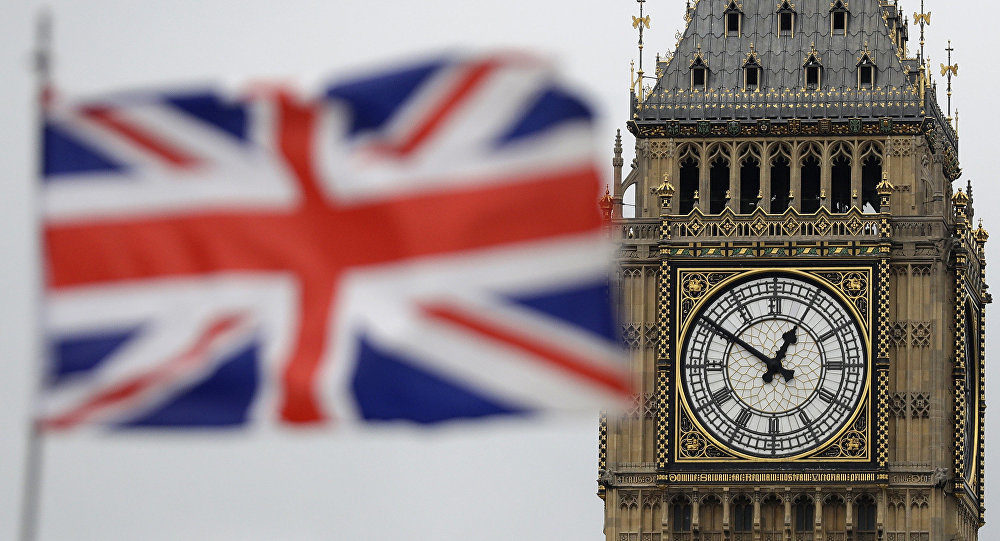
An anonymous minister has confirmed that London's response to the ex-spy's poisoning will be economic. "What happens will be an economic war, these will be economic measures," the source said, speaking to The Independent. Bragging about the size of the British economy compared to Russia's, the minister promised that the government would "do our bit to make [Russia's economy] smaller if they want to carry on like this."
"The message has to be economic, political and diplomatic," the minister stressed, noting that European countries must "behave within the rule of law and not like gangsters."
Comment: Behaving within the rule of law? Say, doesn't that mean relying on things like evidence rather than propagandist fantasies?
According to The Independent, London's measures may include putting hundreds of millions of Russian-owned assets and property under the spotlight, and seize them if their owners are linked to the Russian government or to the Skripal case, and cannot prove a legitimate source for the wealth used to purchase the assets.
Ultimately, the minister vowed that "when measures are announced, the total will be greater than the sum of its parts."
Russian ex-spy and MI6 double agent Sergei Skripal and his daughter Yulia were allegedly poisoned by a toxic nerve agent known as Novichok in the southern English city of Salisbury on March 4, and remain hospitalized in critical condition. On March 12, after meeting with the UK's national security council, Prime Minister Theresa May gave an address to lawmakers, where she gave Russia a 24-hour ultimatum to explain itself or face retaliation.
The Russian Foreign Ministry called May's remarks a "circus show in the UK's parliament," pointing out that the prime minister had presented absolutely no evidence proving Russian involvement. Foreign Minister Sergei Lavrov complained that Russia wasn't provided with any evidence regarding the crime, in spite of the accusation of Russian involvement, and the fact that Russia had made a request for information regarding a crime which affected Yulia Skripal, who is a Russian citizen. A Russian lawmaker noted that Russia had destroyed its stocks of Novichok, something that was confirmed by the Organization for the Prohibition of Chemical Weapons. Media also confirmed Wednesday that the United States military had received access to the nerve agent when the Pentagon was asked to assist in dismantling a Soviet-era chemical weapons research institute in Uzbekistan in the late 1990s.
Expel Russian diplomats, ask for more powers - May's plan over Skripal case
UK Prime Minister Theresa May accused Russia of using a chemical weapon on British soil and told Parliament about plans to retaliate against Moscow.
The measures outlined by May are in response to the poisoning of a former Russian double agent, which the British government described as an "unlawful use of force by the Russian state." The accusation is based on the nature of the poison used, which, Britain said, was developed by the Soviet Union.
Here are the measures Britain is going to take:
Expulsion of 23 Russian diplomats
May said the UK identified 23 people working as diplomats in London, who are actually agents of the Russian intelligence service. Expelling them would undermine Russia's espionage capabilities on British soil, she argued. The move is the largest in decades, according to the Prime Minister.
New legislative powers
May wants her cabinet to have additional powers that, according to her, would boost the government's ability to protect Britain. Those include new powers to detain unwanted individuals at the border, new counter-espionage powers and new powers to impose sanctions.
Limiting ties
The UK will suspend certain senior-level contacts with Russia. This includes the suspension of a planned visit by Russian Foreign Minister Sergey Lavrov to Britain and the cancellation of a planned visit of a British official delegation to the upcoming FIFA World Cup in Russia.
Asset freezes
May said the UK will freeze Russian state assets in the UK that can be used to cause damage to the nation's security. She did not say which assets could be targeted.
Some measures the UK plans to take cannot be shared publicly, May said.
May Targets Putin Over Poisoned Former Spy as Ties Deteriorate
By
and
Updated on
-
U.K. leader ejects 23 Russian diplomats, warns of more attacks
-
Russian Embassy condemns ‘hostile’ British leadership
Other wide-ranging responses, such as financial sanctions or preventing Russian banks from using the SWIFT international payments messaging system, require multilateral support and time.
The Russian Embassy in London denounced the expulsions -- the biggest for more than 30 years -- as “totally unacceptable, unjustified and shortsighted.” May warned the U.K. to expect further “provocations” from Putin.
The crisis is a key test for the British prime minister and comes at a critical time in the country’s history. As she navigates the U.K.’s exit from the European Union, May is trying to maintain close security ties with the bloc while seeking to preserve British influence around the world. With only a year left until Brexit, the extent which the premier’s international counterparts choose to support her will indicate how they weigh relations with the U.K.
The first use of a nerve agent on European soil since World War II is also a direct challenge to the wider Western alliance on how it responds to Putin, days before elections are almost certain to give him a fourth term as president.
May’s retaliation come after Russia refused to recognize a deadline of midnight Tuesday to provide an explanation for the nerve agent attack on Sergei Skripal and his daughter Yulia in southwest England. The pair remain in a critical condition.
‘Sarcasm, Contempt’
“They have treated the use of a military-grade nerve agent in Europe with sarcasm, contempt and defiance,” May told Parliament on Wednesday. “There is no alternative conclusion other than that the Russian state was culpable.”May outlined the action she will take against Putin’s administration, starting with the removal of “undeclared intelligence officers” based in London to “dismantle the Russian espionage network in the U.K.”
She gave 23 officials operating out of the Russian embassy one week’s notice to leave the U.K., saying these individuals were effectively spies.
“This will be the single biggest expulsion for over thirty years and it reflects the fact that this is not the first time that the Russian State has acted against our country,” May said. “Through these expulsions we will fundamentally degrade Russian intelligence capability in the U.K. for years to come -- and if they seek to rebuild it, we will prevent them from doing so.”
Other steps May announced include:
- New laws to give security services the power to detain individuals suspected of “hostile state activity” at the British border, with further measures considered to stop foreign agents operating in the U.K.
- Increased checks on private flights, customs and freight
- Freezing Russian state assets “wherever we have the evidence that they may be used to threaten the life or property of U.K. nationals or residents”
- Police to target “serious criminals and corrupt elites.” May said: “There is no place for these people – or their money - in our country.” This was the closest May came to threatening the wealth of London-based oligarchs -- some of whom are Putin’s enemies while others are close to him
- High-level boycott of this year’s soccer World Cup in Russia -- U.K. ministers and members of the British royal family will not attend
“All the responsibility for the deterioration of the Russia-U.K. relationship lies with the current political leadership of Britain,” the Russian Embassy said.
The nerve agent used in the attack, called Novichok, was developed by the Soviet Union in the 1970s and 80s. The Skripal case also bears similarities to the 2006 murder of Alexander Litvinenko, a dissident Russian ex-spy who died after drinking tea spiked with radioactive polonium.
The prime minister said she’s seeking support from international allies and has already spoken to U.S. President Donald Trump, German Chancellor Angela Merkel and Emmanuel Macron, the French president.
Merkel said Russia must reveal what it knows about the poisoning. “Beyond this case, which on its own must be taken seriously, we have a number of conflicts with Russia,” she said in an interview with television broadcaster ARD, though she warned against breaking off all contact with the Kremlin.
Britain will be making its case for coordinated action at the United Nations Security Council later on Wednesday. Russia is one of five veto-wielding members on it.
“It’s unpleasant, but not the end of the world,” said Andrei Kortunov, head of the Russian International Affairs Council, a research group set up by the Kremlin. “There were much tougher steps mooted, up to a cyber attack. That would have been very dangerous. These measures don’t rule out dialogue which means they’re keeping the bridges open.”
— With assistance by Jess Shankleman, Thomas Penny, Henry Meyer, and Ilya Arkhipov