




Monday, July 9th., 2018

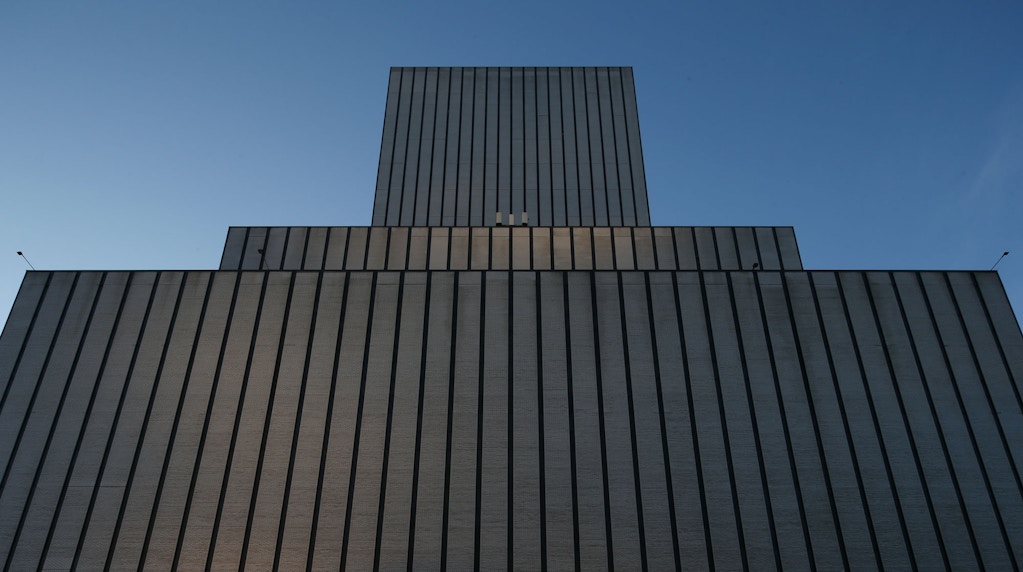
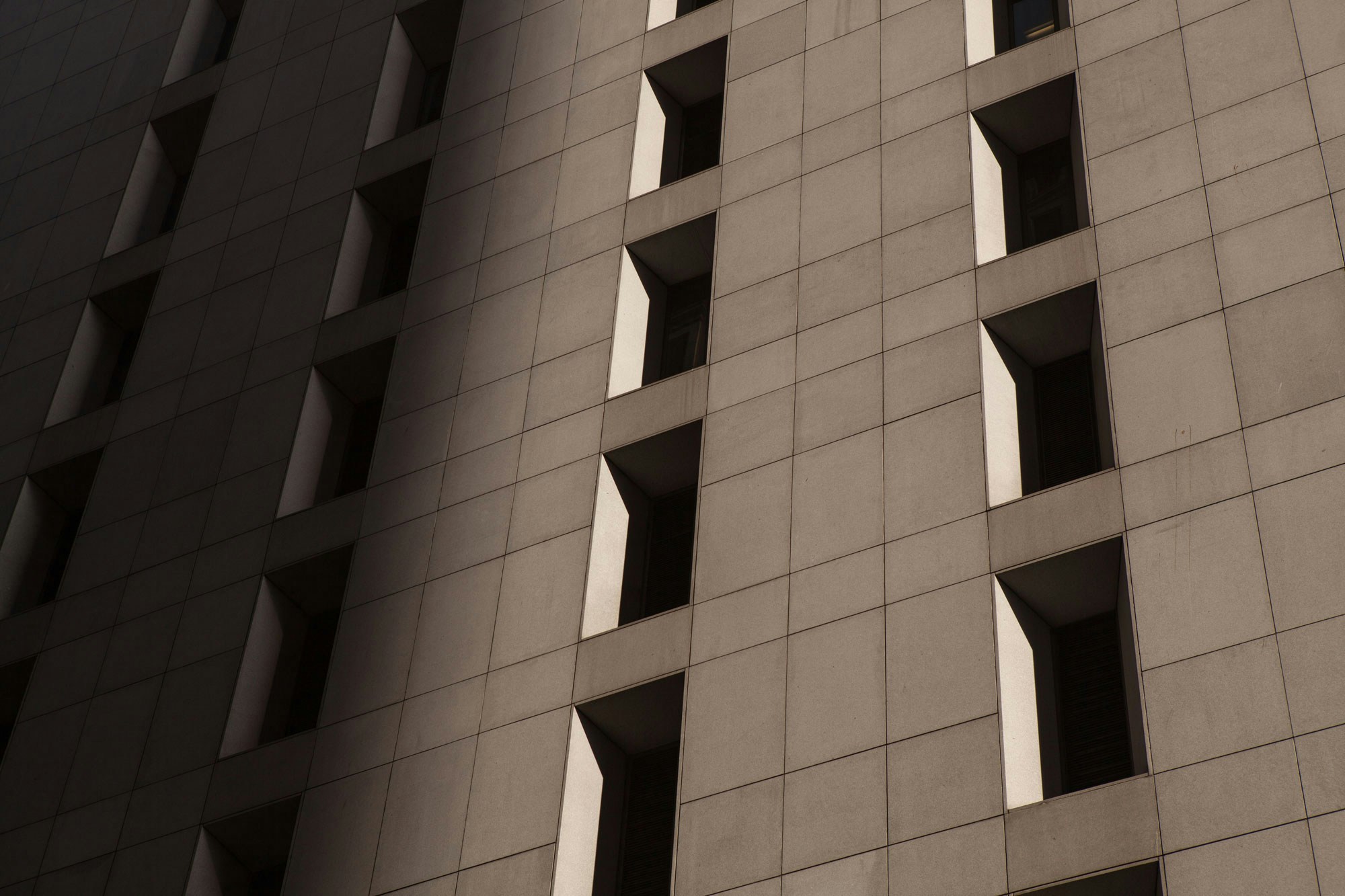
(Ryan Gallagher, Henry Moltke) The secrets are hidden behind fortified walls in cities across the United States, inside towering, windowless skyscrapers.







Ryan Gallagher is a U.K.-based investigative journalist whose work at The Intercept is focused on national security and civil liberties.
Henrik Moltke is an investigative journalist and documentary filmmaker.
Stillness in the Storm Editor’s note: Did you find a spelling error or grammar mistake? Send an email to corrections@stillnessinthestorm.com, with the error and suggested correction, along with the headline and url. Do you think this article needs an update? Or do you just have some feedback? Send us an email at sitsshow@gmail.com. Thank you for reading
Source:
https://theintercept.com/2018/06/25/att-internet-nsa-spy-hubs/
The Wiretap Rooms: The NSA’s Hidden Spy Hubs in Eight US Cities
(Ryan Gallagher, Henry Moltke) The secrets are hidden behind fortified walls in cities across the United States, inside towering, windowless skyscrapers.
The Wiretap Rooms: The NSA’s Hidden Spy Hubs in Eight US Cities
(Ryan Gallagher, Henry Moltke) The
secrets are hidden behind fortified walls in cities across the United
States, inside towering, windowless skyscrapers and fortress-like
concrete structures that were built to withstand earthquakes and even
nuclear attack. Thousands of people pass by the buildings each day and
rarely give them a second glance, because their function is not publicly
known. They are an integral part of one of the world’s largest
telecommunications networks – and they are also linked to a
controversial National Security Agency surveillance program.
Source – The Intercept
Source – The Intercept
by Ryan Gallagher and Henry Moltke, June 25th 2018Atlanta, Chicago, Dallas, Los Angeles, New York City, San Francisco,
Seattle, and Washington, D.C. In each of these cities, The Intercept has
identified an AT&T facility containing networking equipment that
transports large quantities of internet traffic across the United States
and the world. A body of evidence – including classified NSA documents,
public records, and interviews with several former AT&T employees –
indicates that the buildings are central to an NSA spying initiative
that has for years monitored billions of emails, phone calls, and online
chats passing across U.S. territory.
The NSA considers AT&T to be one of its most trusted partners and has lauded the company’s “extreme willingness to help.” It is a collaboration that dates back decades. Little known, however, is that its scope is not restricted to AT&T’s customers. According to the NSA’s documents, it values AT&T not only because it “has access to information that transits the nation,” but also because it maintains unique relationships with other phone and internet providers. The NSA exploits these relationships for surveillance purposes, commandeering AT&T’s massive infrastructure and using it as a platform to covertly tap into communications processed by other companies.
The NSA considers AT&T to be one of its most trusted partners and has lauded the company’s “extreme willingness to help.” It is a collaboration that dates back decades. Little known, however, is that its scope is not restricted to AT&T’s customers. According to the NSA’s documents, it values AT&T not only because it “has access to information that transits the nation,” but also because it maintains unique relationships with other phone and internet providers. The NSA exploits these relationships for surveillance purposes, commandeering AT&T’s massive infrastructure and using it as a platform to covertly tap into communications processed by other companies.
Much has previously been reported about the NSA’s surveillance
programs. But few details have been disclosed about the physical
infrastructure that enables the spying. Last year, The Intercept highlighted a
likely NSA facility in New York City’s Lower Manhattan. Now, we are
revealing for the first time a series of other buildings across the U.S.
that appear to serve a similar function, as critical parts of one of
the world’s most powerful electronic eavesdropping systems, hidden in
plain sight.
“It’s eye-opening and ominous the extent to which this is happening right here on American soil,” said Elizabeth Goitein, co-director of the Liberty and National Security Program at the Brennan Center for Justice. “It puts a face on surveillance that we could never think of before in terms of actual buildings and actual facilities in our own cities, in our own backyards.”
There are hundreds of AT&T-owned properties scattered across the U.S. The eight identified by The Intercept serve a specific function, processing AT&T customers’ data and also carrying large quantities of data from other internet providers. They are known as “backbone” and “peering” facilities.
AT&T currently boasts 19,500 “points of presence” in 149 countries where internet traffic is exchanged. But only eight of the company’s facilities in the U.S. offer direct access to its “common backbone” – key data routes that carry vast amounts of emails, internet chats, social media updates, and internet browsing sessions. These eight locations are among the most important in AT&T’s global network. They are also highly valued by the NSA, documents indicate.
The data exchange between AT&T and other networks initially takes place outside AT&T’s control, sources said, at third-party data centers that are owned and operated by companies such as California’s Equinix. But the data is then routed – in whole or in part – through the eight AT&T buildings, where the NSA taps into it. By monitoring what it calls the “peering circuits” at the eight sites, the spy agency can collect “not only AT&T’s data, they get all the data that’s interchanged between AT&T’s network and other companies,” according to Mark Klein, a former AT&T technician who worked with the company for 22 years. It is an efficient point to conduct internet surveillance, Klein said, “because the peering links, by the nature of the connections, are liable to carry everybody’s traffic at one point or another during the day, or the week, or the year.”
Christopher Augustine, a spokesperson for the NSA, said in a statement that the agency could “neither confirm nor deny its role in alleged classified intelligence activities.” Augustine declined to answer questions about the AT&T facilities, but said that the NSA “conducts its foreign signals intelligence mission under the legal authorities established by Congress and is bound by both policy and law to protect U.S. persons’ privacy and civil liberties.”
Jim Greer, an AT&T spokesperson, said that AT&T was “required by law to provide information to government and law enforcement entities by complying with court orders, subpoenas, lawful discovery requests, and other legal requirements.” He added that the company provides “voluntary assistance to law enforcement when a person’s life is in danger and in other immediate, emergency situations. In all cases, we ensure that requests for assistance are valid and that we act in compliance with the law.”
Dave Schaeffer, CEO of Cogent Communications, told The Intercept that he had no knowledge of the surveillance at the eight AT&T buildings, but said he believed “the core premise that the NSA or some other agency would like to look at traffic … at an AT&T facility.” He said he suspected that the surveillance is likely carried out on “a limited basis,” due to technical and cost constraints. If the NSA were trying to “ubiquitously monitor” data passing across AT&T’s networks, Schaeffer added, he would be “extremely concerned.”
Sprint, Telia, Tata Communications, Telecom Italia, and Deutsche Telekom did not respond to requests for comment. CenturyLink, which owns Level 3, said it would not discuss “matters of national security.”

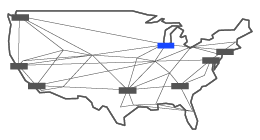
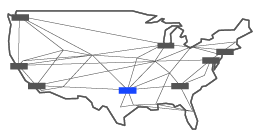
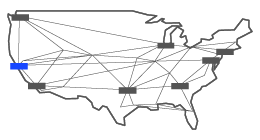
THE EIGHT LOCATIONS are featured on a top-secret NSA map, which depicts U.S. facilities that the agency relies upon for one of its largest surveillance programs, code-named FAIRVIEW. AT&T is the only company involved in FAIRVIEW, which was first established in 1985, according to NSA documents, and involves tapping into international telecommunications cables, routers, and switches.
In 2003, the NSA launched new internet mass surveillance methods, which were pioneered under the FAIRVIEW program. The methods were used by the agency to collect – within a few months – some 400 billion records about people’s internet communications and activity, the New York Times previously reported. FAIRVIEW was also forwarding more than 1 million emails every day to a “keyword selection system” at the NSA’s Fort Meade headquarters.
Central to the internet spying are eight “peering link router complex” sites, which are pinpointed on the top-secret NSA map. The locations of the sites mirror maps of AT&T’s networks, obtained by The Intercept from public records, which show “backbone node with peering” facilities in Atlanta, Chicago, Dallas, Los Angeles, New York City, San Francisco, Seattle, and Washington, D.C.
One of the AT&T maps contains unique codes individually identifying the addresses of the facilities in each of the cities.
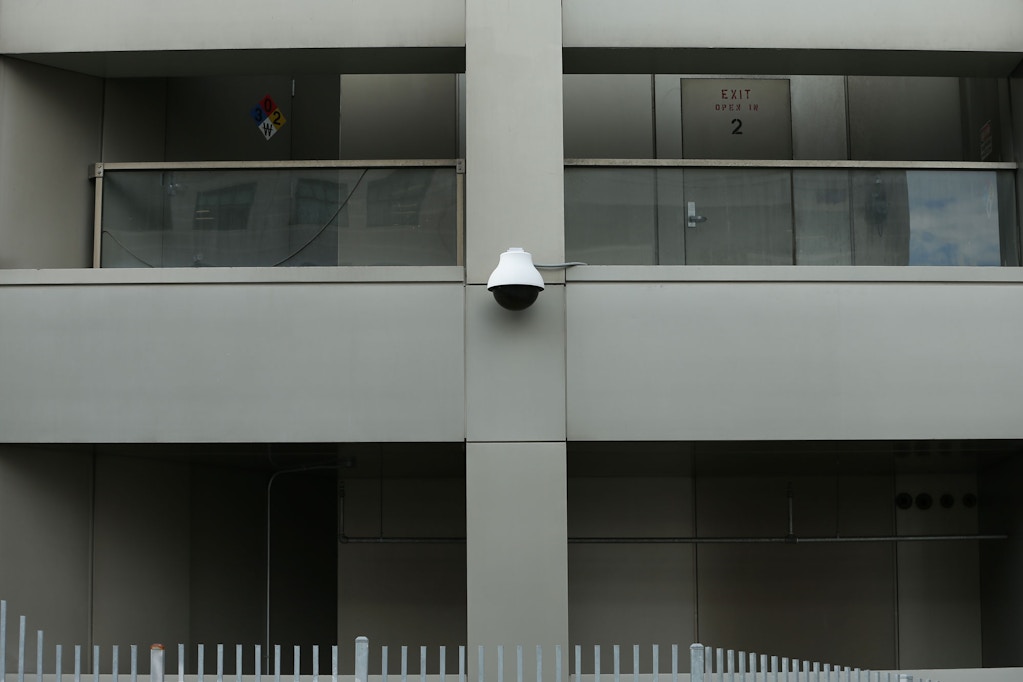
Among the pinpointed buildings, there is a nuclear blast-resistant, windowless facility in New York City’s Hell’s Kitchen neighborhood; in Washington, D.C., a fortress-like, concrete structure less than half a mile south of the U.S. Capitol; in Chicago, an earthquake-resistant skyscraper in the West Loop Gate area; in Atlanta, a 429-foot art deco structure in the heart of the city’s downtown district; and in Dallas, a cube-like building with narrow windows and large vents on its exterior, located in the Old East district.
Elsewhere, on the west coast of the U.S., there are three more facilities: in downtown Los Angeles, a striking concrete tower near the Walt Disney Concert Hall and the Staples Center, two blocks from the most important internet exchange in the region; in Seattle, a 15-story building with blacked-out windows and reinforced concrete foundations, near the city’s waterfront; and in San Francisco’s South of Market neighborhood, a building where it was previously claimed that the NSA was monitoring internet traffic from a secure room on the sixth floor.
The peering sites – otherwise known in AT&T parlance as “Service Node Routing Complexes,” or SNRCs – were developed following the internet boom in the mid- to late 1990s. By March 2009, the NSA’s documents say it was tapping into “peering circuits at the eight SNRCs.”
The facilities’ purpose was to bolster AT&T’s network, improving its reliability and enabling future growth. They were developed under the leadership of an Iranian-American innovator and engineer named Hossein Eslambolchi, who was formerly AT&T’s chief technology officer and president of AT&T Labs, a division of the company that focuses on research and development.
Eslambolchi told The Intercept that the project to set up the facilities began after AT&T asked him to help create “the largest internet protocol network in the world.” He obliged and began implementing his network design by placing large Cisco routers inside former AT&T phone switching facilities across the U.S. When planning the project, he said he divided AT&T’s network into different regions, “and in every quadrant I will have what I will call an SNRC.”
“It’s eye-opening and ominous the extent to which this is happening right here on American soil,” said Elizabeth Goitein, co-director of the Liberty and National Security Program at the Brennan Center for Justice. “It puts a face on surveillance that we could never think of before in terms of actual buildings and actual facilities in our own cities, in our own backyards.”
There are hundreds of AT&T-owned properties scattered across the U.S. The eight identified by The Intercept serve a specific function, processing AT&T customers’ data and also carrying large quantities of data from other internet providers. They are known as “backbone” and “peering” facilities.
While network operators would usually prefer to
send data through their own networks, often a more direct and
cost-efficient path is provided by other providers’ infrastructure. If
one network in a specific area of the country is overloaded with data
traffic, another operator with capacity to spare can sell or exchange
bandwidth, reducing the strain on the congested region. This exchange of
traffic is called “peering” and is an essential feature of the
internet.
Because of AT&T’s position as one of the U.S.’s leading
telecommunications companies, it has a large network that is frequently
used by other providers to transport their customers’ data. Companies
that “peer” with AT&T include the American telecommunications giants
Sprint, Cogent Communications, and Level 3, as well as foreign
companies such as Sweden’s Telia, India’s Tata Communications, Italy’s
Telecom Italia, and Germany’s Deutsche Telekom.AT&T currently boasts 19,500 “points of presence” in 149 countries where internet traffic is exchanged. But only eight of the company’s facilities in the U.S. offer direct access to its “common backbone” – key data routes that carry vast amounts of emails, internet chats, social media updates, and internet browsing sessions. These eight locations are among the most important in AT&T’s global network. They are also highly valued by the NSA, documents indicate.
The data exchange between AT&T and other networks initially takes place outside AT&T’s control, sources said, at third-party data centers that are owned and operated by companies such as California’s Equinix. But the data is then routed – in whole or in part – through the eight AT&T buildings, where the NSA taps into it. By monitoring what it calls the “peering circuits” at the eight sites, the spy agency can collect “not only AT&T’s data, they get all the data that’s interchanged between AT&T’s network and other companies,” according to Mark Klein, a former AT&T technician who worked with the company for 22 years. It is an efficient point to conduct internet surveillance, Klein said, “because the peering links, by the nature of the connections, are liable to carry everybody’s traffic at one point or another during the day, or the week, or the year.”
Christopher Augustine, a spokesperson for the NSA, said in a statement that the agency could “neither confirm nor deny its role in alleged classified intelligence activities.” Augustine declined to answer questions about the AT&T facilities, but said that the NSA “conducts its foreign signals intelligence mission under the legal authorities established by Congress and is bound by both policy and law to protect U.S. persons’ privacy and civil liberties.”
Jim Greer, an AT&T spokesperson, said that AT&T was “required by law to provide information to government and law enforcement entities by complying with court orders, subpoenas, lawful discovery requests, and other legal requirements.” He added that the company provides “voluntary assistance to law enforcement when a person’s life is in danger and in other immediate, emergency situations. In all cases, we ensure that requests for assistance are valid and that we act in compliance with the law.”
Dave Schaeffer, CEO of Cogent Communications, told The Intercept that he had no knowledge of the surveillance at the eight AT&T buildings, but said he believed “the core premise that the NSA or some other agency would like to look at traffic … at an AT&T facility.” He said he suspected that the surveillance is likely carried out on “a limited basis,” due to technical and cost constraints. If the NSA were trying to “ubiquitously monitor” data passing across AT&T’s networks, Schaeffer added, he would be “extremely concerned.”
Sprint, Telia, Tata Communications, Telecom Italia, and Deutsche Telekom did not respond to requests for comment. CenturyLink, which owns Level 3, said it would not discuss “matters of national security.”
Maps: NSA/AT&T
THE EIGHT LOCATIONS are featured on a top-secret NSA map, which depicts U.S. facilities that the agency relies upon for one of its largest surveillance programs, code-named FAIRVIEW. AT&T is the only company involved in FAIRVIEW, which was first established in 1985, according to NSA documents, and involves tapping into international telecommunications cables, routers, and switches.
In 2003, the NSA launched new internet mass surveillance methods, which were pioneered under the FAIRVIEW program. The methods were used by the agency to collect – within a few months – some 400 billion records about people’s internet communications and activity, the New York Times previously reported. FAIRVIEW was also forwarding more than 1 million emails every day to a “keyword selection system” at the NSA’s Fort Meade headquarters.
Central to the internet spying are eight “peering link router complex” sites, which are pinpointed on the top-secret NSA map. The locations of the sites mirror maps of AT&T’s networks, obtained by The Intercept from public records, which show “backbone node with peering” facilities in Atlanta, Chicago, Dallas, Los Angeles, New York City, San Francisco, Seattle, and Washington, D.C.
One of the AT&T maps contains unique codes individually identifying the addresses of the facilities in each of the cities.
Among the pinpointed buildings, there is a nuclear blast-resistant, windowless facility in New York City’s Hell’s Kitchen neighborhood; in Washington, D.C., a fortress-like, concrete structure less than half a mile south of the U.S. Capitol; in Chicago, an earthquake-resistant skyscraper in the West Loop Gate area; in Atlanta, a 429-foot art deco structure in the heart of the city’s downtown district; and in Dallas, a cube-like building with narrow windows and large vents on its exterior, located in the Old East district.
Elsewhere, on the west coast of the U.S., there are three more facilities: in downtown Los Angeles, a striking concrete tower near the Walt Disney Concert Hall and the Staples Center, two blocks from the most important internet exchange in the region; in Seattle, a 15-story building with blacked-out windows and reinforced concrete foundations, near the city’s waterfront; and in San Francisco’s South of Market neighborhood, a building where it was previously claimed that the NSA was monitoring internet traffic from a secure room on the sixth floor.
The peering sites – otherwise known in AT&T parlance as “Service Node Routing Complexes,” or SNRCs – were developed following the internet boom in the mid- to late 1990s. By March 2009, the NSA’s documents say it was tapping into “peering circuits at the eight SNRCs.”
The facilities’ purpose was to bolster AT&T’s network, improving its reliability and enabling future growth. They were developed under the leadership of an Iranian-American innovator and engineer named Hossein Eslambolchi, who was formerly AT&T’s chief technology officer and president of AT&T Labs, a division of the company that focuses on research and development.
Eslambolchi told The Intercept that the project to set up the facilities began after AT&T asked him to help create “the largest internet protocol network in the world.” He obliged and began implementing his network design by placing large Cisco routers inside former AT&T phone switching facilities across the U.S. When planning the project, he said he divided AT&T’s network into different regions, “and in every quadrant I will have what I will call an SNRC.”
During his employment with AT&T, Eslambolchi said he had to take a
polygraph test, and he obtained a government security clearance. “I was
involved in very, very top, heavy-duty projects for a few of these
three-letter agencies,” he said, in an apparent reference to U.S.
intelligence agencies. “They all loved me.”
He would not confirm or deny the exact locations of the eight peering sites identified by The Intercept or discuss the classified work he carried out while with the company. “You put a gun to my head,” he said, “I’m not going to tell you.”
Other former AT&T employees, however, were more forthcoming.
A former senior member of AT&T’s technical staff, who spoke on condition of anonymity due to the sensitivity of the subject, confirmed with “100 percent” certainty the locations of six of the eight peering facilities identified by The Intercept. The source, citing direct knowledge of the facilities and their function, verified the addresses of the buildings in Atlanta, Dallas, Los Angeles, New York City, Seattle, and Washington, D.C.
A second former AT&T employee confirmed the locations of the remaining two sites, in Chicago and San Francisco. “I worked with all of them,” said Philip Long, who was employed by AT&T for more than two decades as a technician servicing its networks. Long’s work with AT&T was carried out mostly in California, but he said his job required him to be in contact with the company’s other facilities across the U.S. In about 2005, Long recalled, he received orders to move “every internet backbone circuit I had in northern California” through the San Francisco AT&T building identified by The Intercept as one of the eight NSA spy hubs. Long said that, at the time, he felt suspicious of the changes, because they were unusual and unnecessary. “We thought we were routing our circuits so that they could grab all the data,” he said. “We thought it was the government listening.” He retired from his job with AT&T in 2014.
A third former AT&T employee reviewed The Intercept’s research and said he believed it accurately identified all eight of the facilities. “The site data certainly seems correct,” said Thomas Saunders, who worked as a data networking consultant for AT&T in New York City between 1995 and 2004. “Those nodes aren’t going to move.”

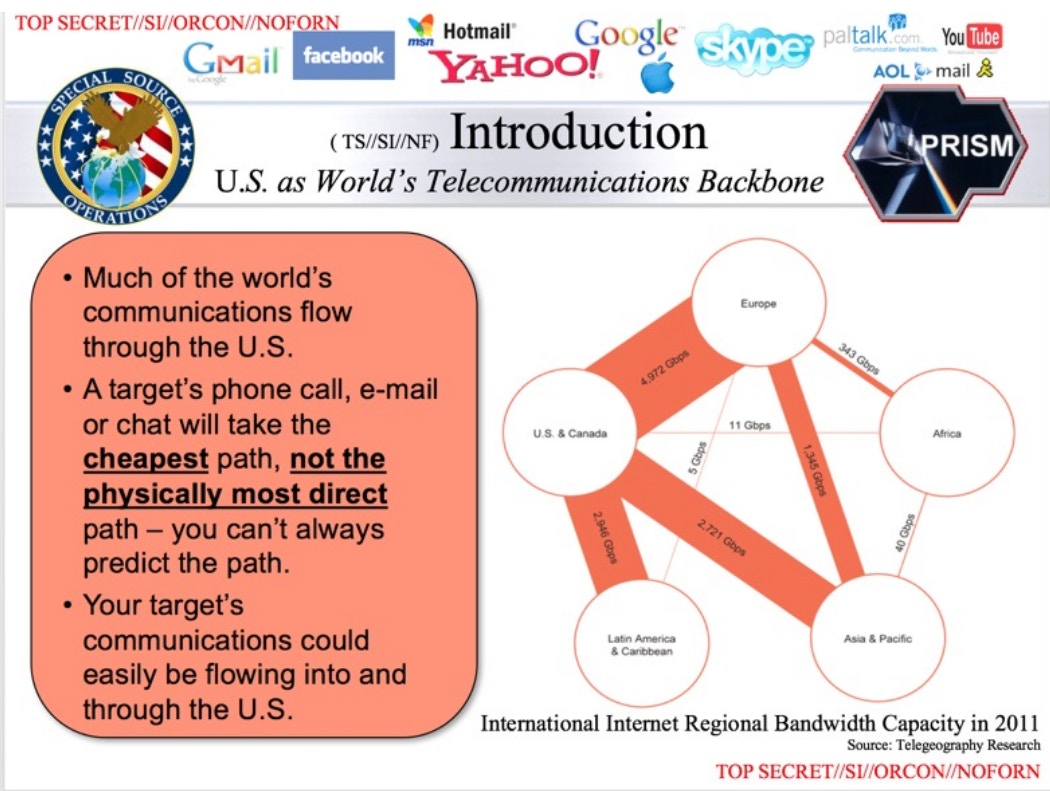
AN ESTIMATED 99 PERCENT of
the world’s intercontinental internet traffic is transported through
hundreds of giant fiber optic cables hidden beneath the world’s oceans. A
large portion of the data and communications that pass across the
cables is routed at one point through the U.S., partly because of the
country’s location – situated between Europe, the Middle East, and Asia –
and partly because of the pre-eminence of American internet companies,
which provide services to people globally.The NSA calls this predicament
“home field advantage” – a kind of geographic good fortune. “A target’s
phone call, email, or chat will take the cheapest path, not the
physically most direct path,” one agency document explains. “Your target’s communications could easily be flowing into and through the U.S.”
Once the internet traffic arrives on U.S. soil, it is processed by American companies. And that is why, for the NSA, AT&T is so indispensable. The company claims it has one of the world’s most powerful networks, the largest of its kind in the U.S. AT&T routinely handles masses of emails, phone calls, and internet chats. As of March 2018, some 197 petabytes of data – the equivalent of more than 49 trillion pages of text, or 60 billion average-sized mp3 files – traveled across its networks every business day.
The NSA documents, which come from the trove provided to The Intercept by the whistleblower Edward Snowden, describe AT&T as having been “aggressively involved” in aiding the agency’s surveillance programs. One example of this appears to have taken place at the eight facilities under a classified initiative called SAGUARO.
As part of SAGUARO, AT&T developed a strategy to help the NSA electronically eavesdrop on internet data from the “peering circuits” at the eight sites, which were said to connect to the “common backbone,” major data routes carrying internet traffic.
The company worked with the NSA to rank communications flowing through its networks on the basis of intelligence value, prioritizing data depending on which country it was derived from, according to a top-secret agency document.

NSA diagrams reveal
that after it collects data from AT&T’s “access links” and “peering
partners,” it is sent to a “centralized processing facility”
code-named PINECONE,
located somewhere in New Jersey. Inside the PINECONE facility, there is
a secure space in which there is both NSA-controlled and
AT&T-controlled equipment. Internet traffic passes through an
AT&T “distribution box” to two NSA systems. From there, the data is
then transferred about 200 miles southwest to its final destination: NSA
headquarters at Fort Meade in Maryland.
At the Maryland compound, the communications collected from AT&T’s networks are integrated into powerful systems called MAINWAY and MARINA, which the NSA uses to analyze metadata – such as the “to” and “from” parts of emails, and the times and dates they were sent. The communications obtained from AT&T are also made accessible through a tool named XKEYSCORE, which NSA employees use to search through the full contents of emails, instant messenger chats, web-browsing histories, webcam photos, information about downloads from online services, and Skype sessions.

THE NSA’S PRIMARY mission
is to gather foreign intelligence. The agency has broad legal powers to
monitor emails, phone calls, and other forms of correspondence as they
are being transported across the U.S., and it can compel companies such
as AT&T to install surveillance equipment within their networks.
Under a Ronald Reagan-era presidential directive – Executive Order 12333 – the NSA has what it calls “transit authority,” which it says enables it to eavesdrop on “communications which originate and terminate in foreign countries, but traverse U.S. territory.” That could include, for example, an email sent by a person in France to a person in Mexico, which on its way to its destination was routed through a server in California. According to the NSA’s documents, it was using AT&T’s networks as of March 2013 to gather some 60 million foreign-to-foreign emails every day, 1.8 billion per month.
Without an individualized court order, it is illegal for the NSA to spy on communications that are wholly domestic, such as emails sent back and forth between two Americans living in Texas. However, in the aftermath of the 9/11 attacks, the agency began eavesdropping on Americans’ international calls and emails that were passing between the U.S. and other countries. That practice was exposed by the New York Times in 2005 and triggered what became known as the “warrantless wiretapping” scandal.
Critics argued that the surveillance of Americans’ international communications was illegal, because the NSA had carried it out without obtaining warrants from a judge and had instead acted on the orders of President George W. Bush. In 2008, Congress weighed into the dispute and controversially authorized elements of the warrantless wiretapping program by enacting Section 702 of the Foreign Intelligence and Surveillance Act, or FISA. The new law allowed the NSA to continue sweeping up Americans’ international communications without a warrant, so long as it did so “incidentally” while it was targeting foreigners overseas – for instance, if it was monitoring people in Pakistan, and they were talking with Americans in the U.S. by phone, email, or through an internet chat service.
Within AT&T’s networks, there is filtering equipment designed to separate foreign and domestic internet data before it is passed to the NSA, the agency’s documents show. Filtering technology is often used by internet providers for security reasons, enabling them to keep tabs on problems with their networks, block out spam, or monitor hacking attacks. But the same tools can be used for government surveillance.
“You can essentially trick the routers into redirecting a small subset of traffic you really care about, which you can monitor in more detail,” said Jennifer Rexford, a computer scientist who worked for AT&T Labs between 1996 and 2005.
He would not confirm or deny the exact locations of the eight peering sites identified by The Intercept or discuss the classified work he carried out while with the company. “You put a gun to my head,” he said, “I’m not going to tell you.”
Other former AT&T employees, however, were more forthcoming.
A former senior member of AT&T’s technical staff, who spoke on condition of anonymity due to the sensitivity of the subject, confirmed with “100 percent” certainty the locations of six of the eight peering facilities identified by The Intercept. The source, citing direct knowledge of the facilities and their function, verified the addresses of the buildings in Atlanta, Dallas, Los Angeles, New York City, Seattle, and Washington, D.C.
A second former AT&T employee confirmed the locations of the remaining two sites, in Chicago and San Francisco. “I worked with all of them,” said Philip Long, who was employed by AT&T for more than two decades as a technician servicing its networks. Long’s work with AT&T was carried out mostly in California, but he said his job required him to be in contact with the company’s other facilities across the U.S. In about 2005, Long recalled, he received orders to move “every internet backbone circuit I had in northern California” through the San Francisco AT&T building identified by The Intercept as one of the eight NSA spy hubs. Long said that, at the time, he felt suspicious of the changes, because they were unusual and unnecessary. “We thought we were routing our circuits so that they could grab all the data,” he said. “We thought it was the government listening.” He retired from his job with AT&T in 2014.
A third former AT&T employee reviewed The Intercept’s research and said he believed it accurately identified all eight of the facilities. “The site data certainly seems correct,” said Thomas Saunders, who worked as a data networking consultant for AT&T in New York City between 1995 and 2004. “Those nodes aren’t going to move.”
Photo: Henrik Moltke
Once the internet traffic arrives on U.S. soil, it is processed by American companies. And that is why, for the NSA, AT&T is so indispensable. The company claims it has one of the world’s most powerful networks, the largest of its kind in the U.S. AT&T routinely handles masses of emails, phone calls, and internet chats. As of March 2018, some 197 petabytes of data – the equivalent of more than 49 trillion pages of text, or 60 billion average-sized mp3 files – traveled across its networks every business day.
The NSA documents, which come from the trove provided to The Intercept by the whistleblower Edward Snowden, describe AT&T as having been “aggressively involved” in aiding the agency’s surveillance programs. One example of this appears to have taken place at the eight facilities under a classified initiative called SAGUARO.
As part of SAGUARO, AT&T developed a strategy to help the NSA electronically eavesdrop on internet data from the “peering circuits” at the eight sites, which were said to connect to the “common backbone,” major data routes carrying internet traffic.
The company worked with the NSA to rank communications flowing through its networks on the basis of intelligence value, prioritizing data depending on which country it was derived from, according to a top-secret agency document.
Graphic: NSA
At the Maryland compound, the communications collected from AT&T’s networks are integrated into powerful systems called MAINWAY and MARINA, which the NSA uses to analyze metadata – such as the “to” and “from” parts of emails, and the times and dates they were sent. The communications obtained from AT&T are also made accessible through a tool named XKEYSCORE, which NSA employees use to search through the full contents of emails, instant messenger chats, web-browsing histories, webcam photos, information about downloads from online services, and Skype sessions.
Top left / right: Mike Osborne. Bottom left: Henrik Moltke. Bottom right: Frank Heath.
Under a Ronald Reagan-era presidential directive – Executive Order 12333 – the NSA has what it calls “transit authority,” which it says enables it to eavesdrop on “communications which originate and terminate in foreign countries, but traverse U.S. territory.” That could include, for example, an email sent by a person in France to a person in Mexico, which on its way to its destination was routed through a server in California. According to the NSA’s documents, it was using AT&T’s networks as of March 2013 to gather some 60 million foreign-to-foreign emails every day, 1.8 billion per month.
Without an individualized court order, it is illegal for the NSA to spy on communications that are wholly domestic, such as emails sent back and forth between two Americans living in Texas. However, in the aftermath of the 9/11 attacks, the agency began eavesdropping on Americans’ international calls and emails that were passing between the U.S. and other countries. That practice was exposed by the New York Times in 2005 and triggered what became known as the “warrantless wiretapping” scandal.
Critics argued that the surveillance of Americans’ international communications was illegal, because the NSA had carried it out without obtaining warrants from a judge and had instead acted on the orders of President George W. Bush. In 2008, Congress weighed into the dispute and controversially authorized elements of the warrantless wiretapping program by enacting Section 702 of the Foreign Intelligence and Surveillance Act, or FISA. The new law allowed the NSA to continue sweeping up Americans’ international communications without a warrant, so long as it did so “incidentally” while it was targeting foreigners overseas – for instance, if it was monitoring people in Pakistan, and they were talking with Americans in the U.S. by phone, email, or through an internet chat service.
Within AT&T’s networks, there is filtering equipment designed to separate foreign and domestic internet data before it is passed to the NSA, the agency’s documents show. Filtering technology is often used by internet providers for security reasons, enabling them to keep tabs on problems with their networks, block out spam, or monitor hacking attacks. But the same tools can be used for government surveillance.
“You can essentially trick the routers into redirecting a small subset of traffic you really care about, which you can monitor in more detail,” said Jennifer Rexford, a computer scientist who worked for AT&T Labs between 1996 and 2005.
According to the NSA’s documents,
it programs its surveillance systems to focus on particular IP
addresses – a set of numbers that identify a computer – associated with
foreign countries. A classified 2012 memo describes the agency’s efforts
to use IP addresses to home in on internet data passing between the
U.S. and particular “regions of interest,” including Iran, Afghanistan,
Israel, Nigeria, Pakistan, Yemen, Sudan, Tunisia, Libya, and Egypt. But
this process is not an exact science, as people can use privacy or
anonymity tools to change or spoof their IP addresses. A person in
Israel could use privacy software to masquerade as if they were
accessing the internet in the U.S. Likewise, an internet user in the
U.S. could make it appear as if they were online in Israel. It is
unclear how effective the NSA’s systems are at detecting such anomalies.
In October 2011, the Foreign Intelligence Surveillance Court, which approves the surveillance operations carried out under Section 702 of FISA, found that there were “technological limitations” with the agency’s internet eavesdropping equipment. It was “generally incapable of distinguishing” between some kinds of data, the court stated. As a consequence, Judge John D. Bates ruled, the NSA had been intercepting the communications of “non-target United States persons and persons in the United States,” violating Fourth Amendment protections against unreasonable searches and seizures. The ruling, which was declassified in August 2013, concluded that the agency had acquired some 13 million “internet transactions” during one six-month period, and had unlawfully gathered “tens of thousands of wholly domestic communications” each year.
The root of the issue was that the NSA’s technology was not only targeting communications sent to and from specific surveillance targets. Instead, the agency was sweeping up people’s emails if they had merely mentioned particular information about surveillance targets.
A top-secret NSA memo about the court’s ruling, which has not been disclosed before, explained that the agency was collecting people’s messages en masse if a single one were found to contain a “selector” – like an email address or phone number – that featured on a target list.
“One example of this is when a user of a webmail service accesses her inbox; if the inbox contains one email message that contains an NSA tasked selector, NSA will acquire a copy of the entire inbox, not just the individual email message that contains the tasked selector,” the memo stated.
The court’s ruling left the agency with two options: shut down the spying based on mentions of targets completely, or ensure that protections were put in place to stop the unlawfully collected communications from being reviewed. The NSA chose the latter option, and created a “cautionary banner” that warned its analysts not to read particular messages unless they could confirm that they had been lawfully obtained.
But the cautionary banner did not solve the problem. The NSA’s analysts continued to access the same data repositories to search, unlawfully, for information on Americans. In April 2017, the agency publicly acknowledged these violations, which it described as “inadvertent compliance incidents.” It said that it would no longer use surveillance programs authorized under Section 702 of FISA to harvest messages that mentioned its targets, citing “technological constraints, United States person privacy interests, and certain difficulties in implementation.”
The messages that the NSA had unlawfully collected were swept up using a method of surveillance known as “upstream,” which the agency still deploys for other surveillance programs authorized under both Section 702 of FISA and Executive Order 12333. The upstream method involves tapping into communications as they are passing across internet networks – precisely the kind of electronic eavesdropping that appears to have taken place at the eight locations identified by The Intercept.


In October 2011, the Foreign Intelligence Surveillance Court, which approves the surveillance operations carried out under Section 702 of FISA, found that there were “technological limitations” with the agency’s internet eavesdropping equipment. It was “generally incapable of distinguishing” between some kinds of data, the court stated. As a consequence, Judge John D. Bates ruled, the NSA had been intercepting the communications of “non-target United States persons and persons in the United States,” violating Fourth Amendment protections against unreasonable searches and seizures. The ruling, which was declassified in August 2013, concluded that the agency had acquired some 13 million “internet transactions” during one six-month period, and had unlawfully gathered “tens of thousands of wholly domestic communications” each year.
The root of the issue was that the NSA’s technology was not only targeting communications sent to and from specific surveillance targets. Instead, the agency was sweeping up people’s emails if they had merely mentioned particular information about surveillance targets.
A top-secret NSA memo about the court’s ruling, which has not been disclosed before, explained that the agency was collecting people’s messages en masse if a single one were found to contain a “selector” – like an email address or phone number – that featured on a target list.
“One example of this is when a user of a webmail service accesses her inbox; if the inbox contains one email message that contains an NSA tasked selector, NSA will acquire a copy of the entire inbox, not just the individual email message that contains the tasked selector,” the memo stated.
The court’s ruling left the agency with two options: shut down the spying based on mentions of targets completely, or ensure that protections were put in place to stop the unlawfully collected communications from being reviewed. The NSA chose the latter option, and created a “cautionary banner” that warned its analysts not to read particular messages unless they could confirm that they had been lawfully obtained.
But the cautionary banner did not solve the problem. The NSA’s analysts continued to access the same data repositories to search, unlawfully, for information on Americans. In April 2017, the agency publicly acknowledged these violations, which it described as “inadvertent compliance incidents.” It said that it would no longer use surveillance programs authorized under Section 702 of FISA to harvest messages that mentioned its targets, citing “technological constraints, United States person privacy interests, and certain difficulties in implementation.”
The messages that the NSA had unlawfully collected were swept up using a method of surveillance known as “upstream,” which the agency still deploys for other surveillance programs authorized under both Section 702 of FISA and Executive Order 12333. The upstream method involves tapping into communications as they are passing across internet networks – precisely the kind of electronic eavesdropping that appears to have taken place at the eight locations identified by The Intercept.
Photo: Frank Heath
Atlanta 51 Peachtree Center Avenue
The AT&T building in Atlanta was originally
constructed in the 1920s as the main telephone exchange for the city’s
downtown area. The art deco structure, made of limestone, was designed
to be the largest in the city at the time at 25 stories tall. However,
due to the Great Depression, plans were scaled back and at first, it
only had six stories. Between 1947 and 1963, the building was upgraded
to host 14 stories, and a large brown microwave tower – visible for
miles – was also added. A profile of the building on the History Atlanta website notes that it contains “operations, phone exchanges and other communications equipment for AT&T.”
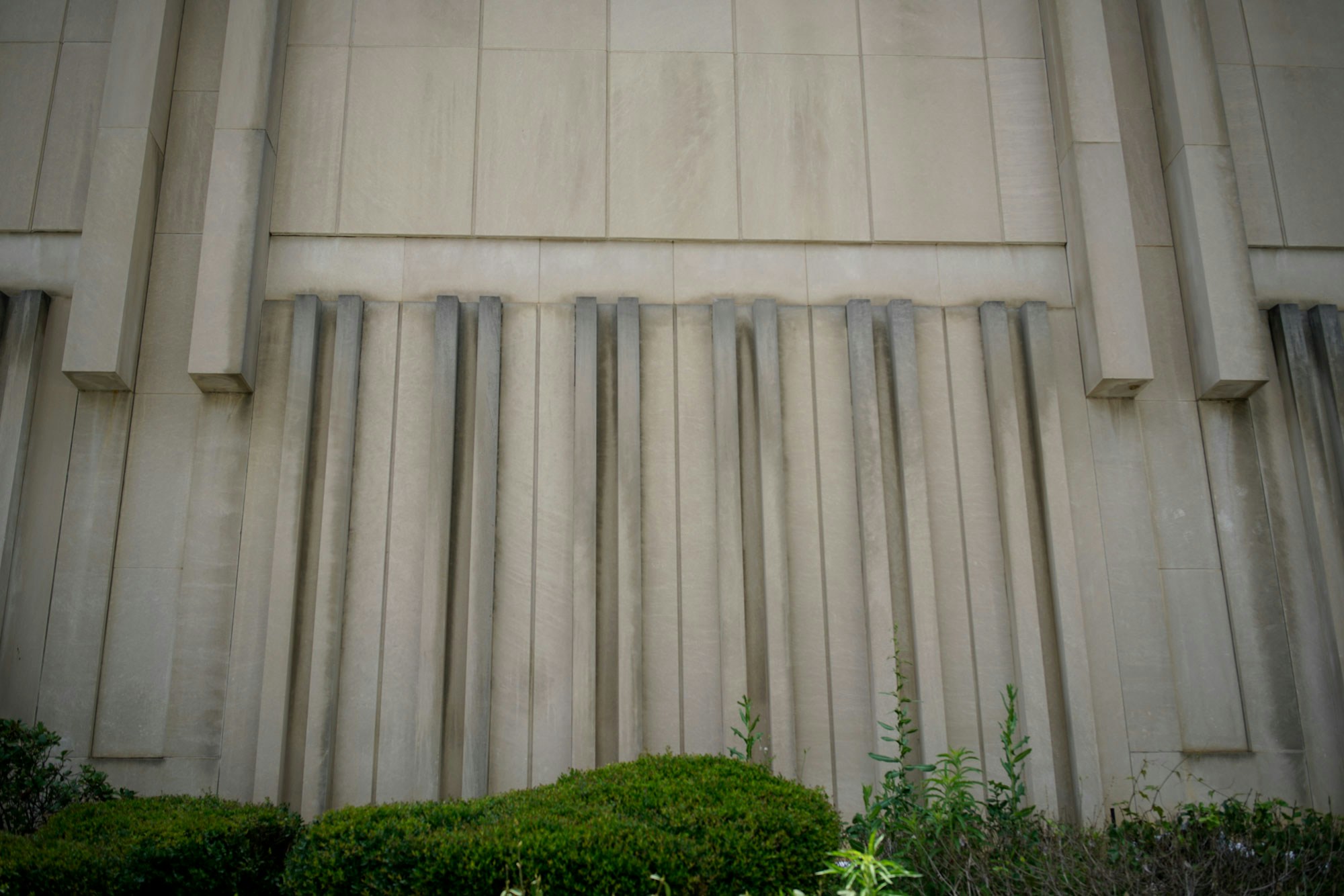
Photo: Frank Heath
NSA and AT&T maps point to the Atlanta facility
as being one of eight “peering” hubs that process internet traffic as
part of the NSA surveillance program code-named FAIRVIEW.
One former AT&T employee – who spoke on condition of anonymity –
confirmed that the site was one of eight primary AT&T “Service Node Routing Complexes,” or SNRCs, in the U.S. NSA documents explicitly describe tapping into flows of data at all eight of these sites.
Information provided by a second former AT&T
employee adds to the evidence linking the Atlanta building to NSA
surveillance. Mark Klein, a former AT&T technician, alleged in 2006
that the company had allowed the NSA to install surveillance equipment
in some of its network hubs. An AT&T facility in Atlanta was one of
the spy sites, according to documents Klein presented in a court case
over the alleged spying. The Atlanta facility was equipped with
“splitter” equipment, which was used to make copies of internet traffic
as AT&T’s networks processed it. The copied data would then be
diverted to “SG3” equipment – a reference to “Study Group 3” – which was
a code name AT&T used for activities related to NSA surveillance,
according to evidence in the Klein case.
The Atlanta facility is likely of strategic importance for the NSA.
The site is the closest major AT&T internet routing center to Miami,
according to the NSA and AT&T maps. From undersea cables that come
aground at Miami, huge flows of data pass between the U.S. and South
America. It is probable that much of that data is routed through the
Atlanta facility as it is being sent to and from the U.S. In recent
years, the NSA has extensively targeted several Latin American countries
– such as Mexico, Brazil, and Venezuela – for surveillance.
Photo: Henrik Moltke
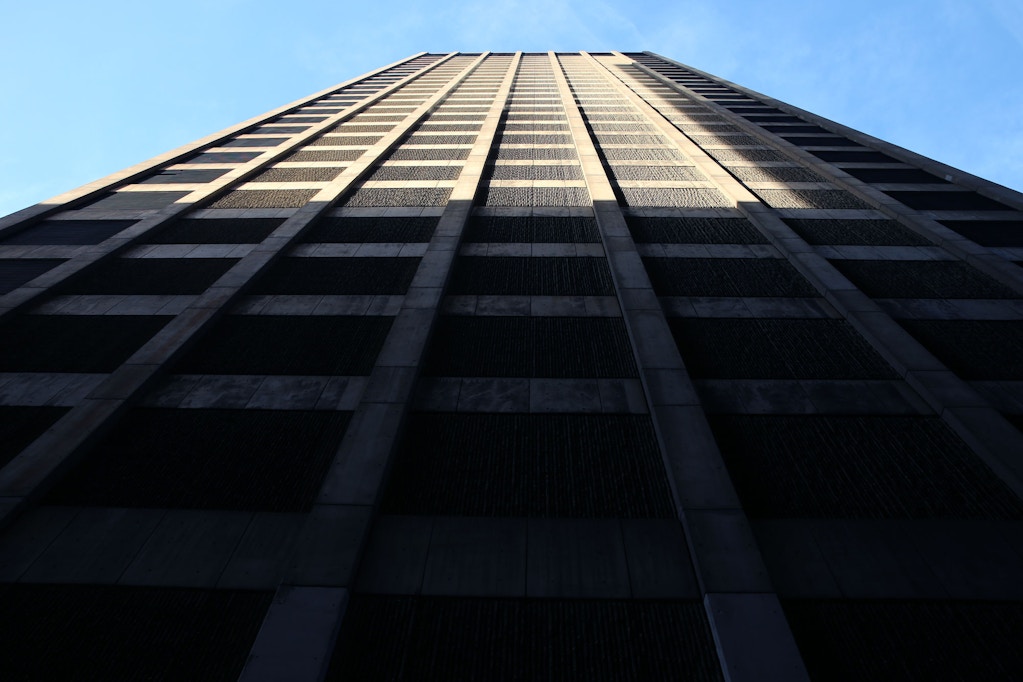
Chicago 10 South Canal Street
Like many other major telecommunications hubs built during the late
1960s and early 1970s, the Chicago AT&T building was designed amid
the Cold War to withstand a nuclear attack. The 538-foot skyscraper,
located in the West Loop Gate area of the city, was completed in 1971.
There are windows at both the top and bottom of the vast concrete
structure, but 18 of its 28 floors are windowless.According to the
Chicago Sun-Times, the facility handles much of the city’s phone and
internet traffic and is equipped with banks of routers, servers, and
switching systems. “This building touches every single resident of the
city,” Jim Wilson, an AT&T area manager, told the newspaper in 2016.
Photo: Henrik Moltke
One of the building’s architects, John Augur Holabird, said in
a 1998 interview that it housed “a big switchboard.” He added: “In case
the atomic bomb hits Milwaukee, you’ll be happy to know your telephone
line will still go through even though the rest of us are wiped out. And
that’s what that building was for.”10 South Canal Street originally
contained a million-gallon oil tank, turbine generators, and a water
well, so that it could continue to function for more than two weeks
without electricity or water from the city, according to Illinois
broadcaster WBEZ. The building is “anchored in bedrock, which helps
support the weight of the equipment inside, and gives it extra
resistance to bomb blasts or earthquakes,” WBEZ reported.
Today, the facility contains six large V-16 yellow Caterpillar
generators that can provide backup electricity in the event of a power
failure, according to
the Chicago Sun Times. Inside the skyscraper, AT&T stores some
200,000 gallons of diesel fuel, enough to run the generators for 40
days.NSA and AT&T maps point to the Chicago facility as being one of
the “peering” hubs, which process internet traffic as part of the NSA
surveillance program code-named FAIRVIEW.
Philip Long, who was employed by AT&T for more than two decades as a
technician servicing its networks, confirmed that the Chicago site was
one of eight primary AT&T “Service Node Routing Complexes,” or SNRCs, in the U.S. NSA documents explicitly describe tapping into flows of data at all eight of these sites.
Photo: Mike Osborne
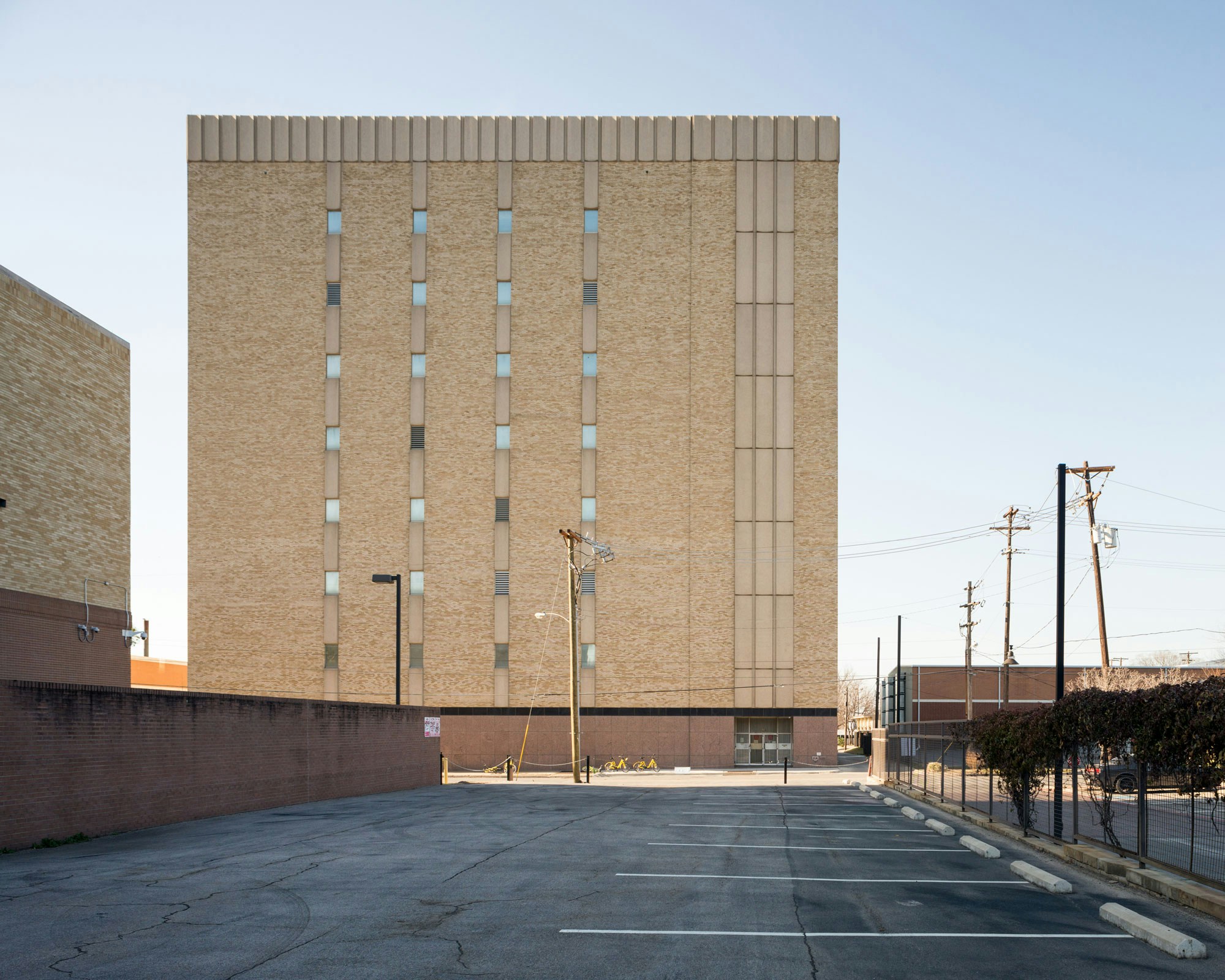
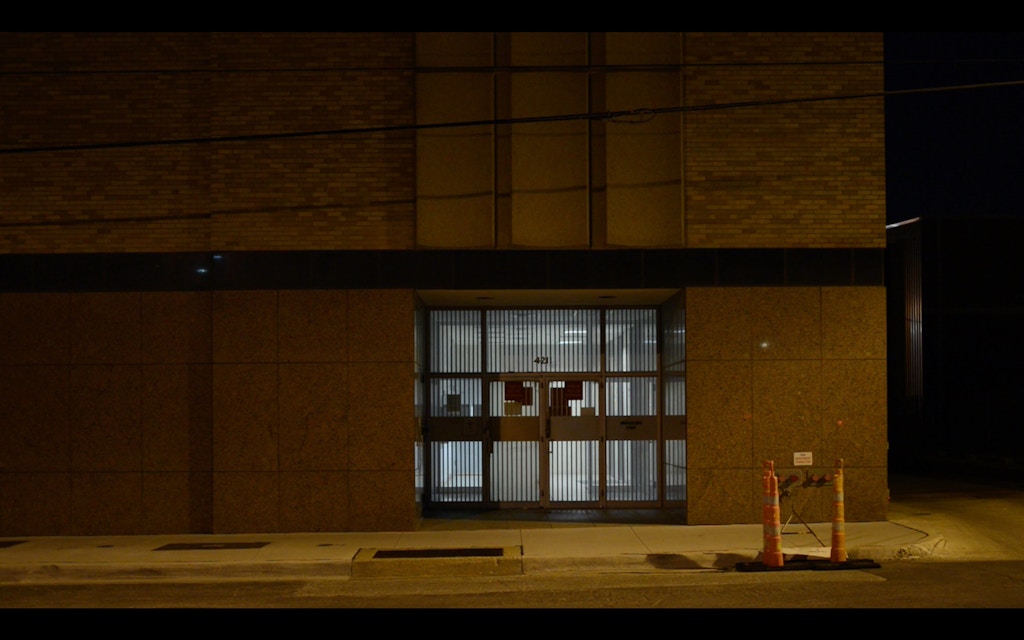
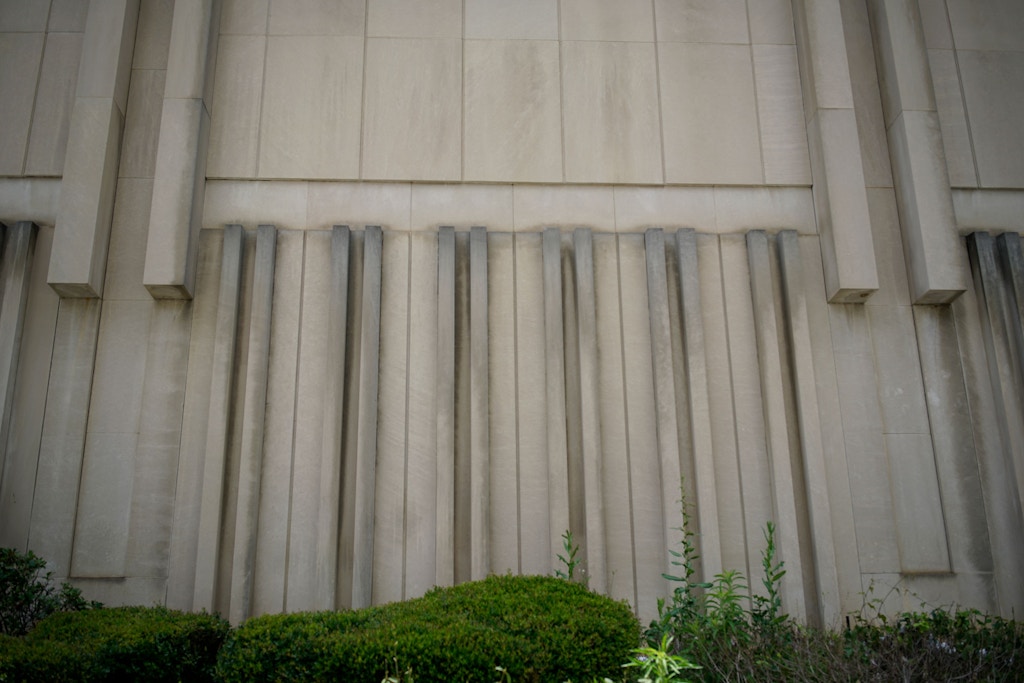
Dallas 4211 Bryan Street
This AT&T building is a fortified, cube-like structure, located
in the Old East area of Dallas, not far from Baylor University Medical
Center. Built in 1961, it is a light yellow-brown color with a granite
foundation. Large vents are visible on the exterior of the building, as
are several narrow windows, many of which appear to have been blacked
out or covered in a reflective privacy glass.The 4211 Bryan Street
facility is located next to other AT&T-owned buildings, including a
towering telephone routing complex that was first built in 1904. A piece about
the telephone hub in the Dallas Observer described it as “an imposing,
creepy building” that is “known in some circles as The Great Wall of
Beige.”
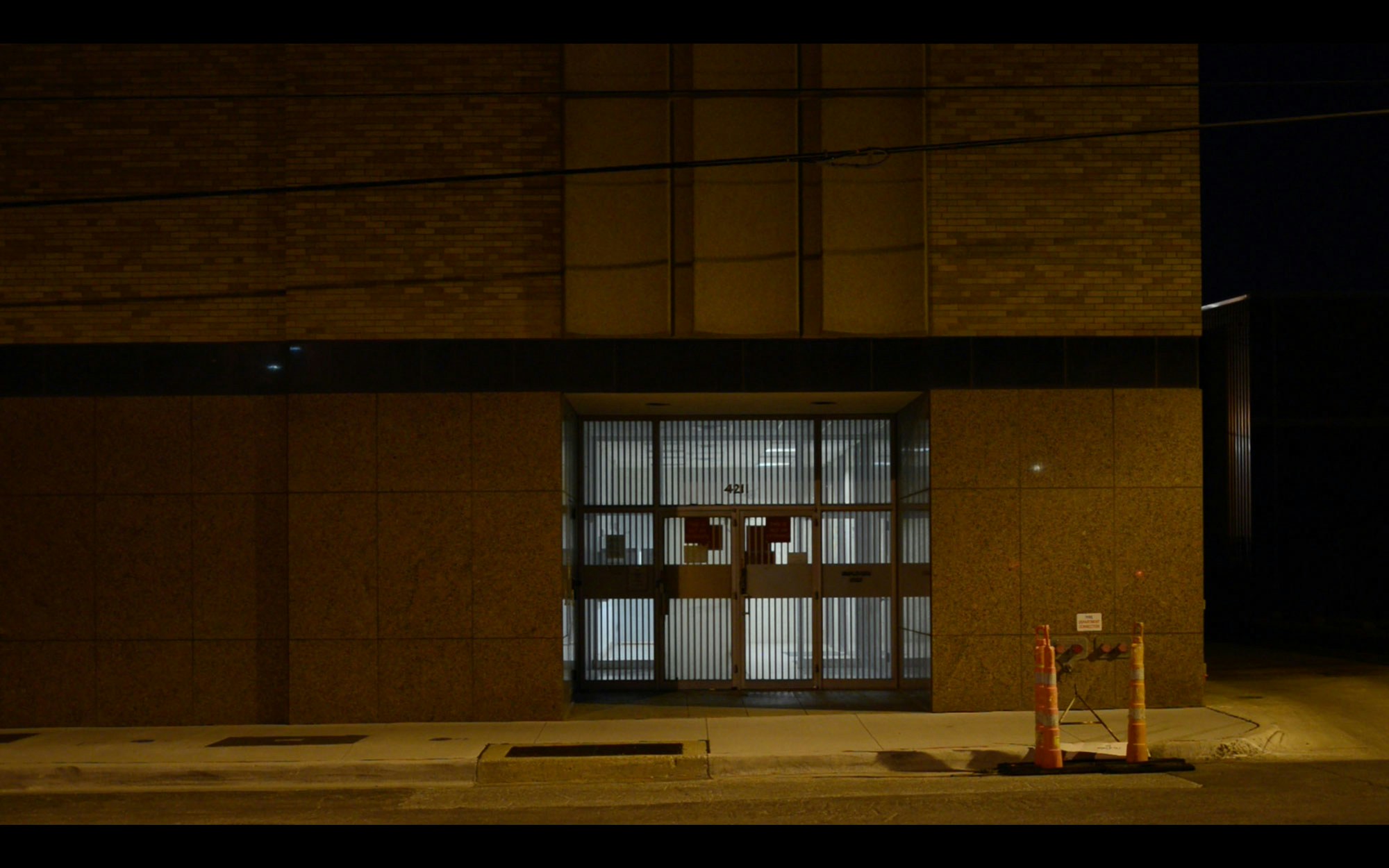
Photo: Mike Osborne
According to the Central Office website,
which profiles telecommunications buildings across the U.S., the Dallas
telephone hub is “the main regional tandem and AT&T for long
distance and toll services in the Dallas Texas region.” Today, the
building also has “major fiber connections to Plano, Irving, Tulsa,
Oklahoma City, Ft. Worth, Abilene, Houston and Austin,” the website
adds.NSA and AT&T maps point to the 4211 Bryan Street facility as
being one of the “peering” hubs, which process internet traffic as part
of the NSA surveillance program code-named FAIRVIEW. A former AT&T employee confirmed that the site was one of eight primary AT&T “Service Node Routing Complexes,” or SNRCs, in the U.S. NSA documents explicitly describe tapping into flows of data at all eight of these sites.
Photo: Henrik Moltke
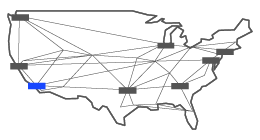
Los Angeles 420 South Grand Avenue
At the time of its construction in 1961, the AT&T building known
as the Madison Complex was the tallest building in downtown Los Angeles.
It has since been dwarfed by a number of corporate office skyscrapers
in the surrounding Financial District.Located between Chinatown and the
Staples Center, the fortress-like structure is one of the largest
telephone central offices in the U.S. “The theoretical number of
telephone lines that can be served from this office are 1.3 million and
this office also serves as a foreign exchange carrier to neighboring
area codes,” according to the Central Office, a website that profiles U.S. telecommunications hubs.

“Untitled, or Bell Communications Around the Globe”.
Mural by Anthony Heinsbergen (1961) on the West side of 420 South Grand
Ave, La.
Photo: Henrik Moltke
The 448-foot, 17-story building is beige,
rectangular, and mostly windowless. On its roof, there is a large
microwave tower, which was originally used to transmit phone calls
across a network of antennae. The tower’s technology became obsolete in
the early 1990s, and it ceased to operate. It remains in place today as a
sort of monument to outdated methods of communication and stands in
contrast to the more modern buildings in the vicinity, many of them
owned by banks.
The Madison Complex is located just two blocks from One Wilshire,
which houses what is reportedly the most important internet exchange on
the U.S. west coast. “Billions of phone calls, emails and internet pages
pass through One Wilshire every week,” the Los Angeles Times reported in
2013, “because it is the primary terminus for major fiber-optic cable
routes between Asia and North America.”Due to the close proximity of the
Madison Complex and One Wilshire, and their shared role as
telecommunications hubs, it is likely that the buildings process some of
the same data as it is being routed across U.S. networks.
NSA and AT&T maps point to the Madison Complex facility as being one of the “peering” hubs, which process internet traffic as part of the NSA surveillance program code-named FAIRVIEW. A former AT&T employee confirmed that the site was one of eight primary AT&T “Service Node Routing Complexes,” or SNRCs, in the U.S. NSA documents explicitly describe tapping into flows of data at all eight of these sites.
NSA and AT&T maps point to the Madison Complex facility as being one of the “peering” hubs, which process internet traffic as part of the NSA surveillance program code-named FAIRVIEW. A former AT&T employee confirmed that the site was one of eight primary AT&T “Service Node Routing Complexes,” or SNRCs, in the U.S. NSA documents explicitly describe tapping into flows of data at all eight of these sites.
Photo: Henrik Moltke
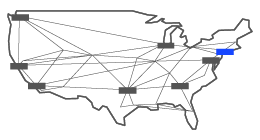
New York City 811 10th Avenue
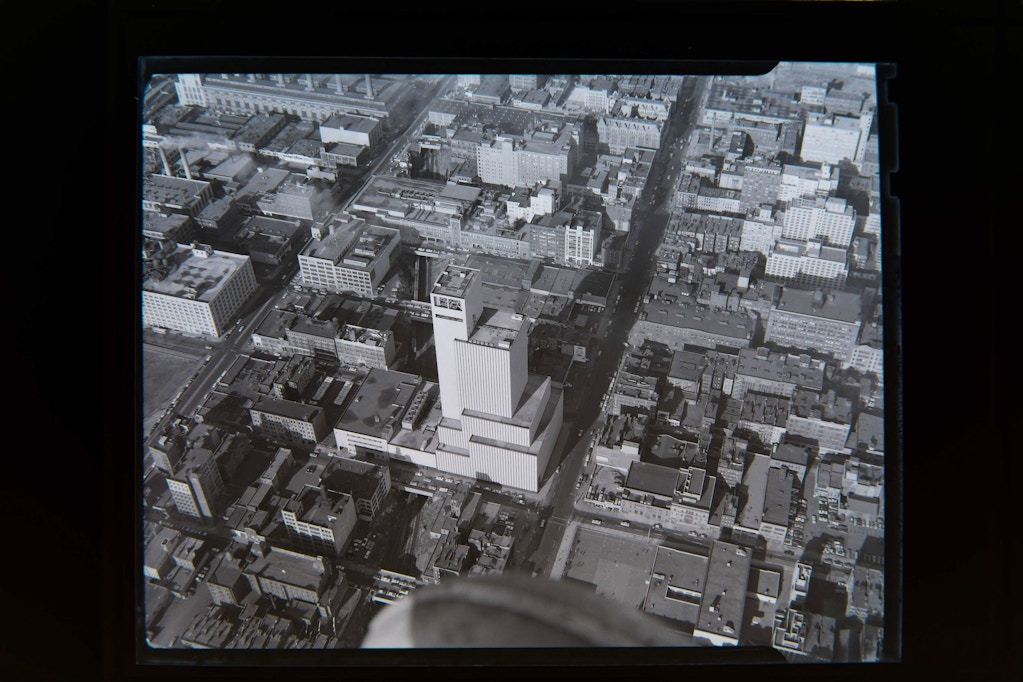
It was built in 1964 as New York City’s first major
telecommunications fortress. The striking concrete and granite AT&T
building – located in the Hell’s Kitchen area about a 15-minute walk
from Central Park – is 134 meters tall, with 21 floors, each one of them
windowless and built to resist a nuclear blast.A New York Times article published
in 1975 noted that 811 10th Avenue was “the first of several windowless
equipment buildings to be constructed” in the city, and added that its
design initially “caused considerable controversy.”
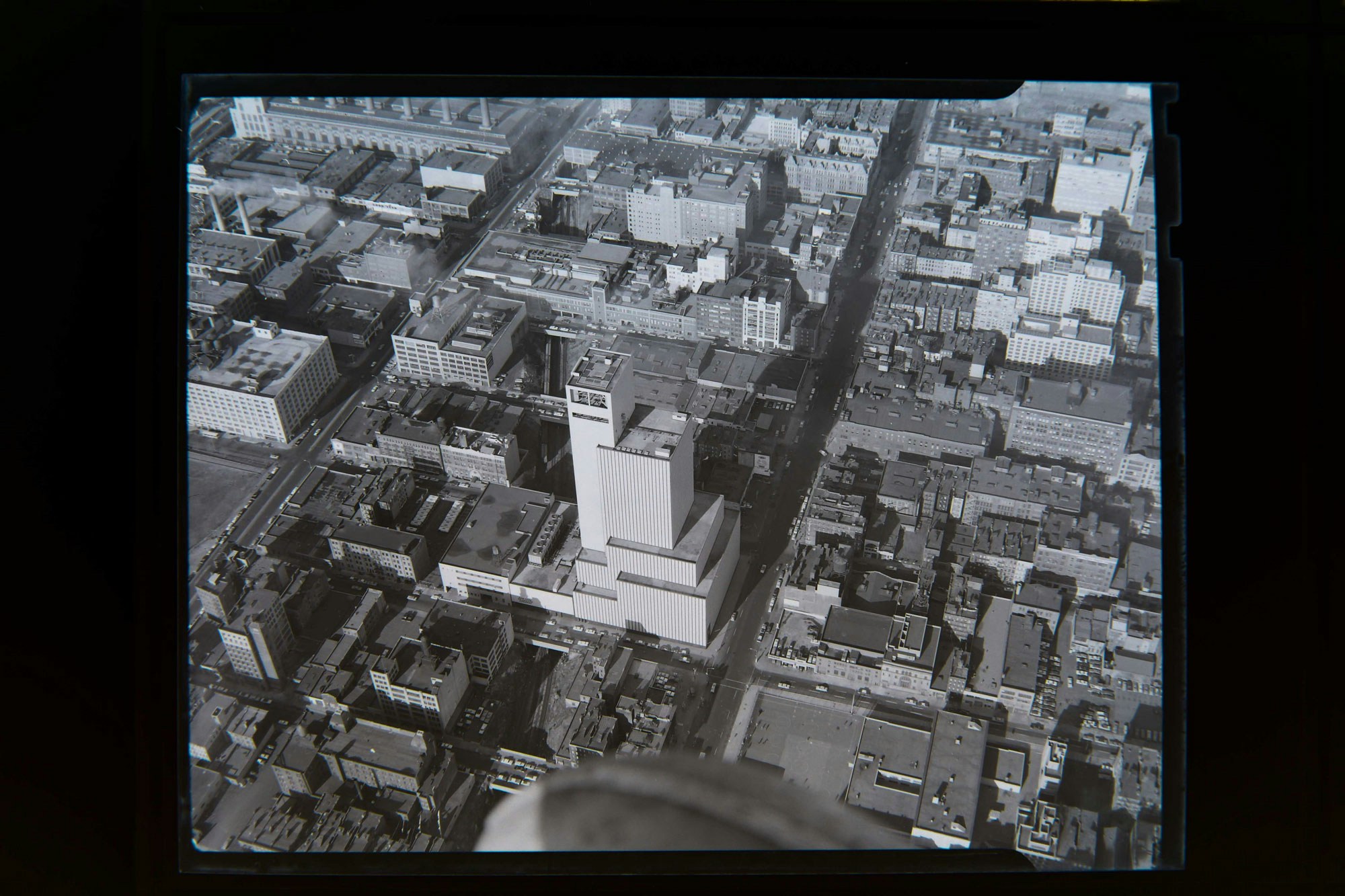
Aerial shot of 811 10th street, NYC, ca. 1965.
Photo: courtesy of Avery Architectural & Fine Arts Library, Columbia University
According to AT&T records,
the building is “hardened telco data center” and was upgraded in 2000
to become an internet data center. Thomas Saunders, a former AT&T
engineer, told The Intercept that, in the 1970s, the building was
considered to be “the biggest hub for transmission [of communications]
in the country.” Saunders also claimed that, had Bush been in Manhattan
during the 9/11 attacks, the Secret Service would have taken him to
safety inside the AT&T facility. “It’s the strongest building in
town,” he said.
Photo: Henrik Moltke
NSA and AT&T maps indicate that the 10th Avenue facility is one
of eight “peering” hubs that process internet traffic as part of the NSA
surveillance program code-named FAIRVIEW. Two former AT&T employees confirmed that the site was one of eight primary AT&T “Service Node Routing Complexes,” or SNRCs, in the U.S. NSA documents explicitly describe tapping into flows of data at all eight of these sites.
The design of the building
bears some resemblance to another windowless building in New York City –
AT&T’s towering skyscraper at 33 Thomas Street in lower Manhattan.
As The Intercept reported in
2016, 33 Thomas Street is a major hub for routing international phone
calls and appears to contain a secure NSA surveillance room – code-named
TITANPOINTE – that has been used to tap into faxes and phone calls.NSA
and AT&T documents indicate that 10th Avenue building serves as the
NSA’s internet equivalent of 33 Thomas Street. While the NSA’s
surveillance at 33 Thomas Street mainly targets phone calls that pass
through the building’s international switching points, at the 10th
Avenue site the agency appears to primarily collect emails, online
chats, and data from internet browsing sessions.
Photo: Henrik Moltke
San Francisco 611 Folsom Street
This San Francisco AT&T building has been described as the city’s
telecommunications “nerve center.” It is about 256 feet tall, has nine
floors, and its exterior is covered in silver-colored panels; there are a
series of vents that can be seen at street level, but there are few
windows.NSA and AT&T maps obtained by The Intercept indicate that
611 Folsom Street is one of the eight “peering” hubs in the U.S. that
process internet traffic as part of the NSA surveillance program
code-named FAIRVIEW.
Philip Long, who was employed by AT&T for more than two decades as a
technician servicing its networks, confirmed that the San Francisco
site is one of eight primary AT&T “Service Node Routing Complexes,” or SNRCs, in the U.S. NSA documents explicitly describe tapping into flows of data at all eight of these sites.
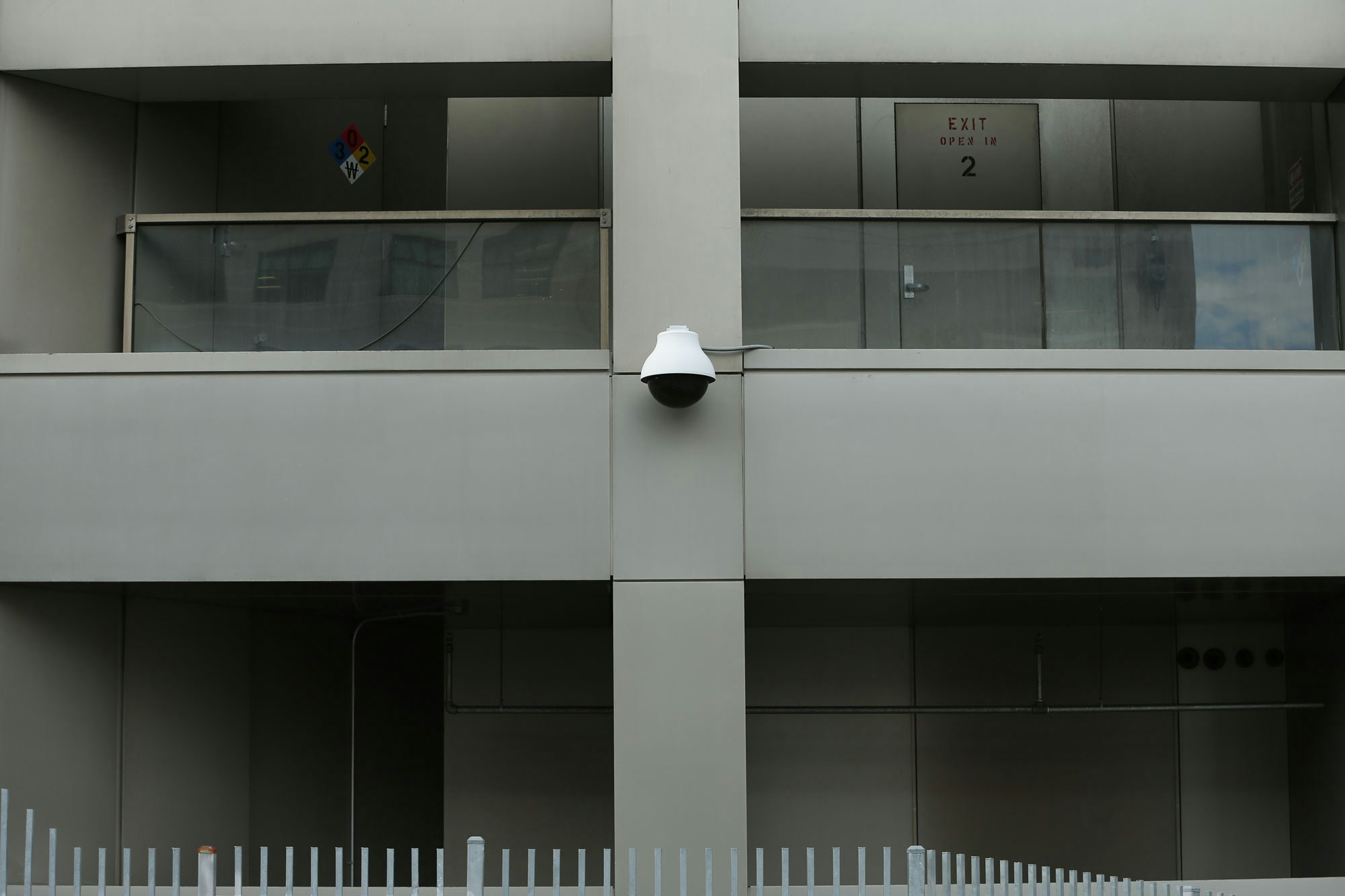
Photo: Henrik Moltke
Long recalled that, in the early 2000s, he “moved every internet
backbone circuit I had in northern California” through the Folsom Street
office. At the time, he said, he and his colleagues found it strange
that they were asked to suddenly reroute all of the traffic, because
“there was nothing wrong with the services, no facility problems.”“We
were getting orders to move backbones … and it just grabbed me,” said
Long. “We thought it was government stuff and that they were being
intrusive. We thought we were routing our circuits so that they could
grab all the data.”
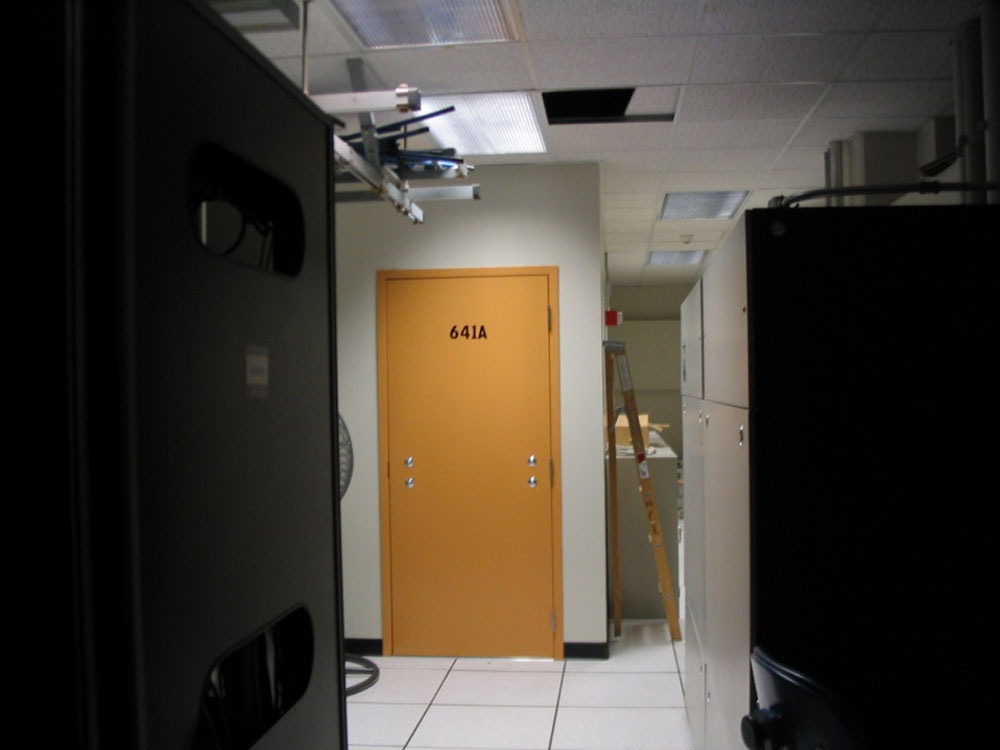
It is not the first time the building has been implicated in revelations about electronic eavesdropping. In 2006, an AT&T technician named Mark Klein alleged in a sworn court declaration that the NSA was tapping into internet traffic from a secure room on the sixth floor of the facility.
Klein, who worked at 611 Folsom Street between October 2003 and May 2004, stated that employees from the agency had visited the building and recruited one of AT&T’s management level technicians to carry out a “special job.” The job involved installing a “splitter cabinet” that copied internet data as it was flowing into the building, before diverting it into the secure room.
It is not the first time the building has been implicated in revelations about electronic eavesdropping. In 2006, an AT&T technician named Mark Klein alleged in a sworn court declaration that the NSA was tapping into internet traffic from a secure room on the sixth floor of the facility.
Klein, who worked at 611 Folsom Street between October 2003 and May 2004, stated that employees from the agency had visited the building and recruited one of AT&T’s management level technicians to carry out a “special job.” The job involved installing a “splitter cabinet” that copied internet data as it was flowing into the building, before diverting it into the secure room.

The room at AT&T’s Folsom St. facility that allegedly contained NSA surveillance equipment.
Photo: Mark Klein
He said equipment in the secure room included a
“semantic traffic analyzer” – a tool that can be used to search large
quantities of data for particular words or phrases contained in emails
or online chats. Notably, Klein discovered that the NSA appeared to be
specifically targeting internet “peering links,” which is corroborated
by the NSA and AT&T documents obtained by The Intercept.
“By cutting into the peering links, they get not only AT&T’s
data, they get all the data that’s interchanged between AT&T’s
network and other companies,” Klein told The Intercept in a recent
interview.According to documents provided by Klein, AT&T’s network
at Folsom Street “peered” with other companies like Sprint, Cable &
Wireless, and Qwest. It was also linked, he said, to an internet
exchange named MAE West, a major data hub in San Jose, California, where
other companies connect their networks together.
Sprint did not respond to a request for comment. A spokesperson for Cable & Wireless said the company only discloses data “when legally required to do so as a result of a valid warrant or other legal process.” In 2011, CenturyLink acquired Qwest as part of a $12.2 billion merger deal. A CenturyLink spokesperson said he could not discuss “matters of national security.”
Sprint did not respond to a request for comment. A spokesperson for Cable & Wireless said the company only discloses data “when legally required to do so as a result of a valid warrant or other legal process.” In 2011, CenturyLink acquired Qwest as part of a $12.2 billion merger deal. A CenturyLink spokesperson said he could not discuss “matters of national security.”
Photo: Jovelle Tamayo for The Intercept
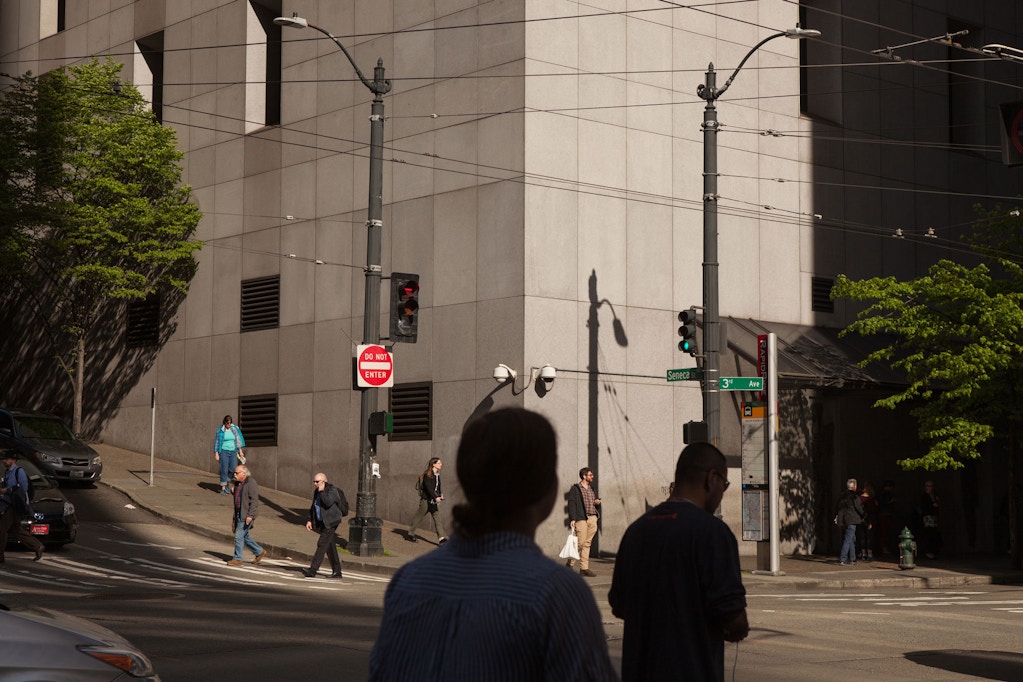
Seattle 1122 3rd Avenue
The Seattle facility is located in the city’s downtown area, not far
from the waterfront. The gray building is 15 stories tall, with a dozen
rows of narrow, blacked-out windows and vents that rise to its peak.
According to public records,
it was first constructed in 1955 and has reinforced concrete
foundations and exterior walls that are supported by a steel
frame.Historically, the facility was an important communications
switching point in the northwest of the U.S., routing calls between
places like Bellingham, Spokane, Yakima, and north to Canada and Alaska.
Today, the building appears to be primarily owned by
the Qwest Corporation – a subsidiary of CenturyLink – but AT&T has a
presence within it. AT&T’s logo is emblazoned on a plaque outside
the building’s entrance.
Twenty-five miles north of Seattle, there is a major
intercontinental undersea cable called Pacific Crossing-1, which routes
communications between the U.S. and Japan; it is possible that the
Seattle building processes some of these communications and others that
pass between the U.S. west coast and Asia.
Photo: Jovelle Tamayo for The Intercept
NSA and AT&T maps point to the Seattle facility
as being of eight “peering” hubs that process internet traffic as part
of the NSA surveillance program code-named FAIRVIEW. A former AT&T employee confirmed that the site was one of eight primary AT&T “Service Node Routing Complexes,” or SNRCs, in the U.S. NSA documents explicitly describe tapping into flows of data at all eight of these sites.
Photo: Henrik Moltke
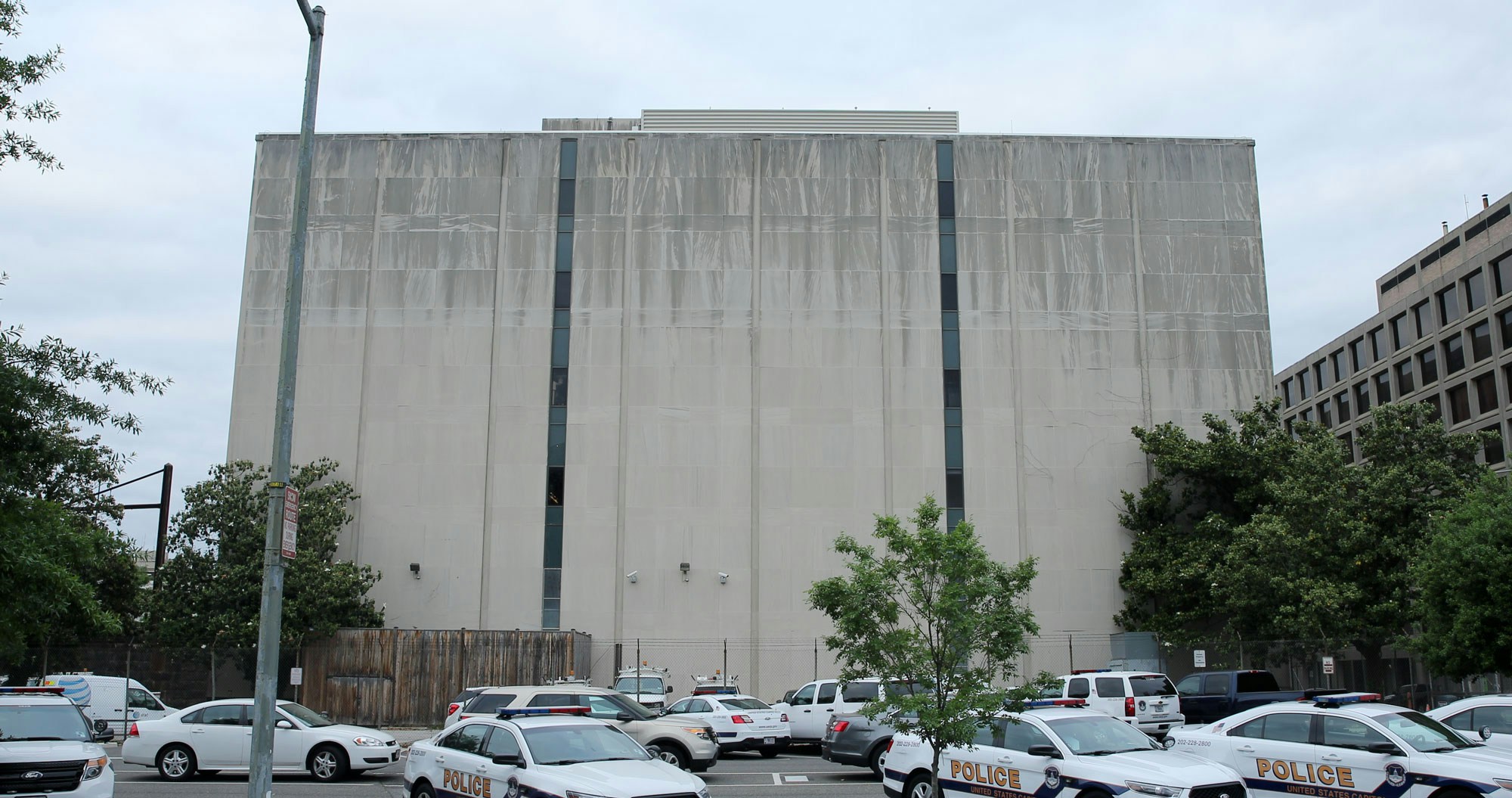
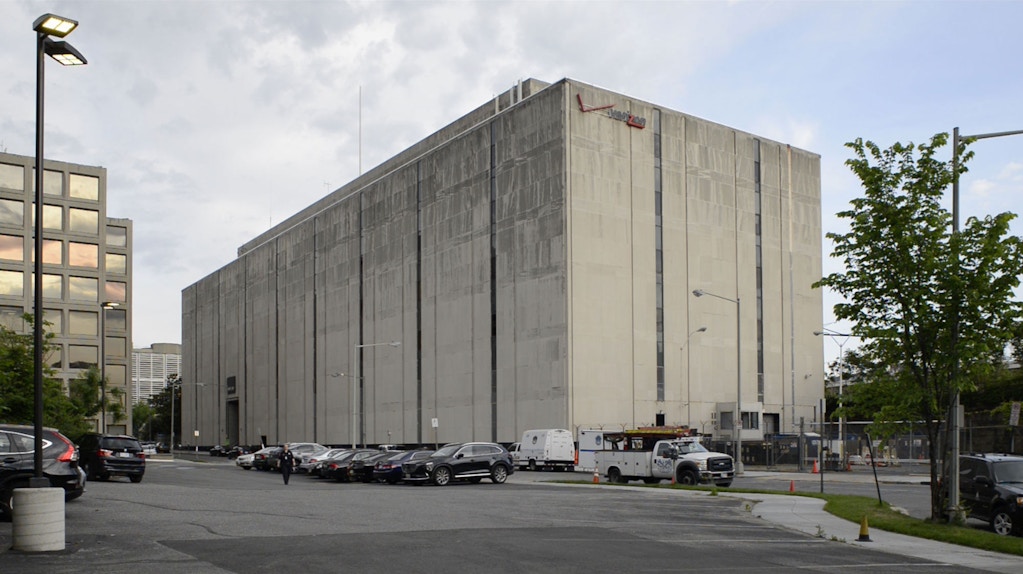
Washington, D.C. 30 E Street Southwest
The building is a large, concrete, rectangular-shaped facility with
few windows, located less than a mile south of the U.S. Capitol.
Property tax records show that Verizon owns the majority of the property
(worth $26 million), while AT&T owns a smaller part (worth $8.8
million). Plans of the building’s internal layout show that AT&T has
space on the fourth, fifth, and sixth floors.Central Office Buildings,
a website that
profiles telecommunications hubs in North America, describes the 30 E
Street South West facility as “the granddaddy HQ of Verizon landline in
Washington, DC.” It adds that the building contains a “a slew of
switches of various types,” including AT&T equipment for routing
long distance phone calls across networks.
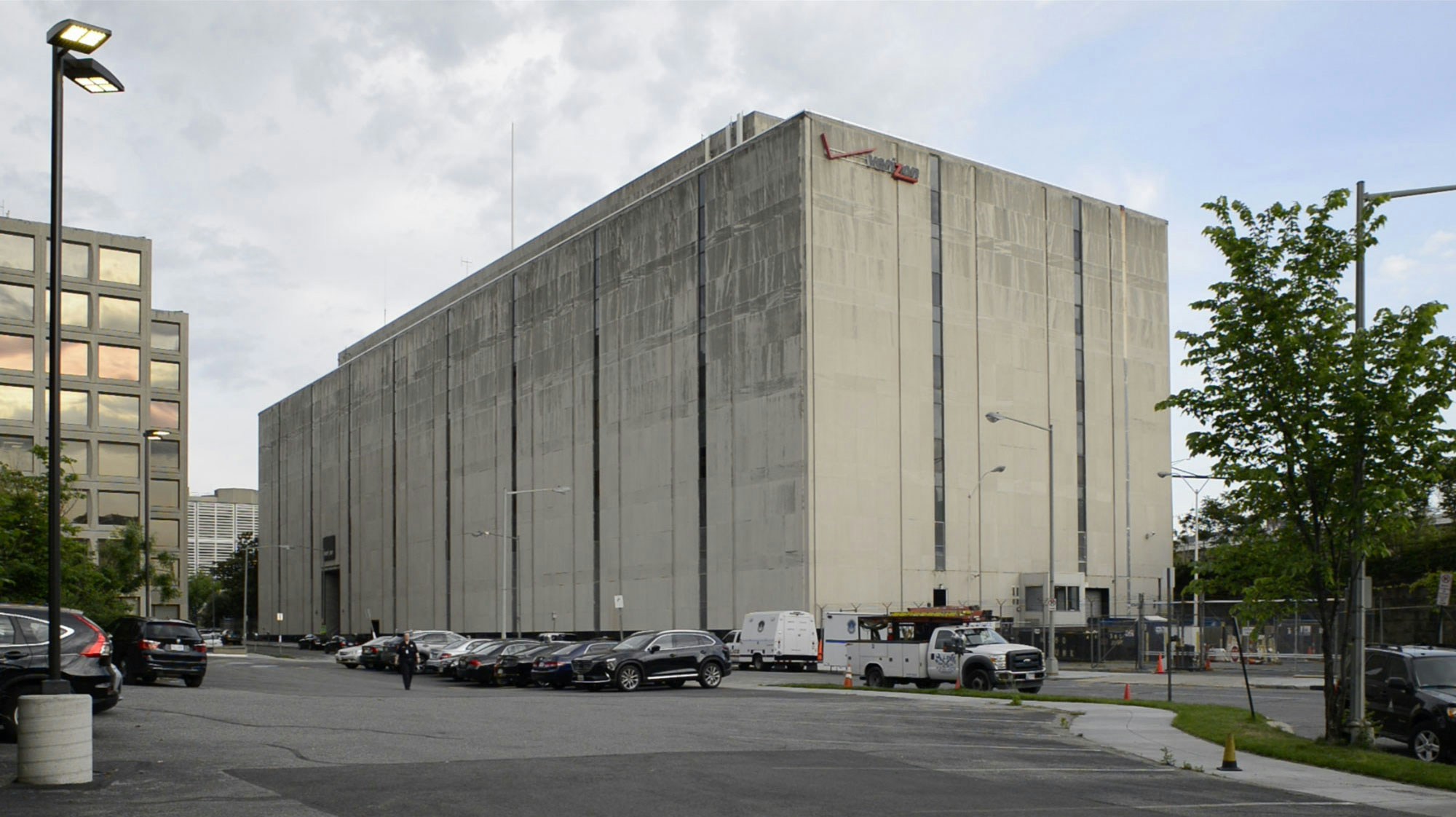
Photo: Mike Osborne
Capitol Police has an office located opposite the telecommunications
hub, and a large number of police vehicles are usually located around
the site. When The Intercept visited the facility to take photographs
earlier this year, within a few minutes, several armed police officers
arrived on the scene with dogs. They questioned our reporter, searched
his car, and said that the building was considered critical
infrastructure.NSA and AT&T maps point to the Washington, D.C.
facility as being one of eight “peering” hubs that process internet
traffic as part of the NSA surveillance program code-named FAIRVIEW. A former AT&T employee confirmed that the site was one of eight primary AT&T “Service Node Routing Complexes,” or SNRCs, in the U.S. NSA documents explicitly describe tapping into flows of data at all eight of these sites.
Documents
Documents published with this article:- FAA702 comms memo
- FAIRVIEW brief overview
- FAIRVIEW overview with notes
- SSO dictionary relevant entries
- SSO news relevant entries
- NSA’s SIDtoday on Executive Order 12333
Ryan Gallagher is a U.K.-based investigative journalist whose work at The Intercept is focused on national security and civil liberties.
Henrik Moltke is an investigative journalist and documentary filmmaker.
Stillness in the Storm Editor’s note: Did you find a spelling error or grammar mistake? Send an email to corrections@stillnessinthestorm.com, with the error and suggested correction, along with the headline and url. Do you think this article needs an update? Or do you just have some feedback? Send us an email at sitsshow@gmail.com. Thank you for reading
Source:
https://theintercept.com/2018/06/25/att-internet-nsa-spy-hubs/