Monday, June 12th., 2017

'The Time Is Ripe': UK Heads for Brexit, EU Chiefs Accelerate Plans for EU Army
©
Photo: Airbus Group
French
aviation giant Airbus is preparing to craft a new fighter jet, as the
European Union moves ever closer to its dream of an integrated defense
policy, and corresponding European army – plans which has accelerated
considerably as the UK, arguably the continent's foremost military
power, prepares to exit the bloc.
Speaking
to local media, Airbus' military division head Fernando Alonso said
financing for the new fighter had been provided from the governments
of Germany and Spain, and he hoped France would also participate.
 Mark @markito0171
Moreover, a purchase from the US would also run contrary to the EU's stated aim of achieving technological and strategic "sovereignty" as part of its defense plans, which will see €1.5 billion (US$1.7 billion) spent annually on EU-wide military research and development, and joint procurement fund designed to facilitate projects such as the FCAS.
Tim Robinson @RAeSTimR
 The development of the FCAS also comes as the UK, roughly tied
with France as the EU's main military power, prepares to start secession
negotiations. Brexit evidently looms large in Airbus' considerations —
the company currently employs 10,000 at two manufacturing plants in the
UK, although Chief Operating Officer Fabrice Bregier has made clear
unless the UK negotiates an "amicable" deal with the EU (allowing staff
to freely move between the UK and the continent, and the firm to import
and export wares without punitive tariffs) it will move the plants
elsewhere.
The development of the FCAS also comes as the UK, roughly tied
with France as the EU's main military power, prepares to start secession
negotiations. Brexit evidently looms large in Airbus' considerations —
the company currently employs 10,000 at two manufacturing plants in the
UK, although Chief Operating Officer Fabrice Bregier has made clear
unless the UK negotiates an "amicable" deal with the EU (allowing staff
to freely move between the UK and the continent, and the firm to import
and export wares without punitive tariffs) it will move the plants
elsewhere.
 While talks were originally scheduled to commence June 19, question marks hang over
Prime Minister Theresa May's ability to form a government, potentially
delaying negotiations. Nonetheless, the UK government remains officially
committed to securing the country's withdrawal — and EU chiefs are
evidently more committed than ever to creating a unified European army.
While talks were originally scheduled to commence June 19, question marks hang over
Prime Minister Theresa May's ability to form a government, potentially
delaying negotiations. Nonetheless, the UK government remains officially
committed to securing the country's withdrawal — and EU chiefs are
evidently more committed than ever to creating a unified European army.
There are suggestions Germany has already been quietly and informally building such a configuration, with divisions of Romanian, Czech and Dutch troops effectively subject to German command, and the militaries of Romania and the Czech Repubic due to likewise integrate one brigade each into the Bundeswehr. Such a prospect was originally mooted in November 2016, when the bloc agreed on a combined security and defense plan — although the plan excluded the prospect of creating an EU army, it promoted integration.
Mark @markito0171
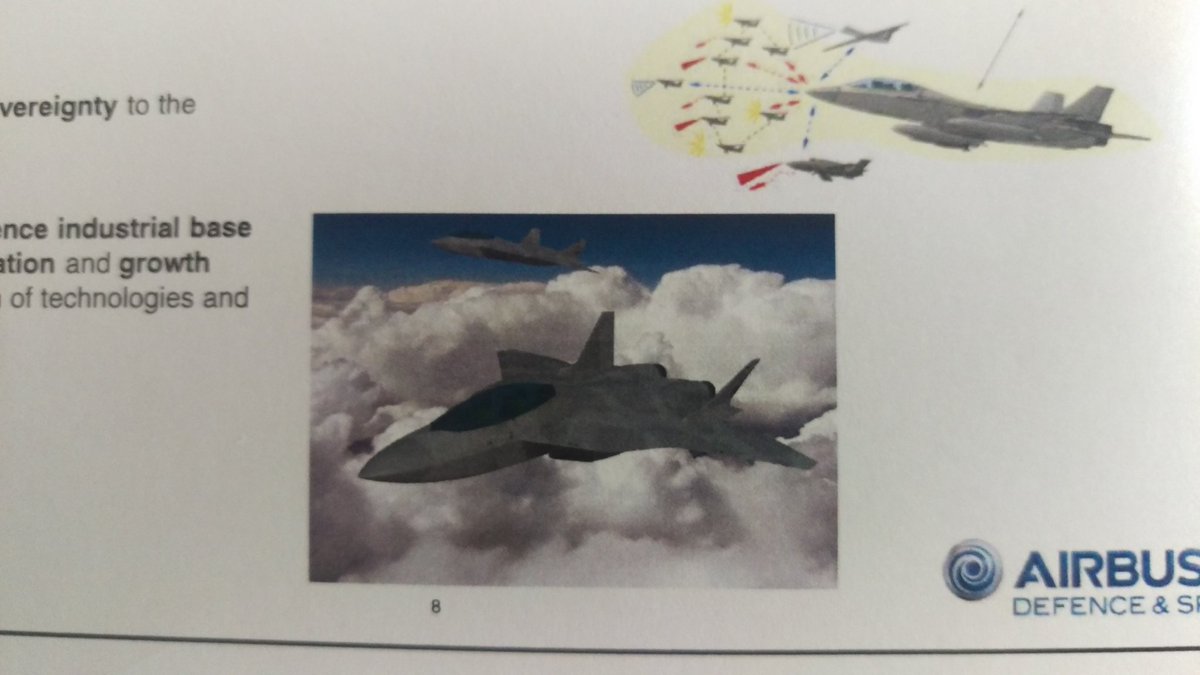
Airbus announces "Future Combat Air System" for Europe
https://www.linkedin.com/pulse/airbus-announces-future-combat-air-system-fcas-vagias-msc-ceng-mraes …
"We have to work together in Europe, there is
no more space for two or three different systems. The time is ripe
for making and implementing a decision [on common defense]," he added.
The Airbus project, the Future Combat Air System, will replace the
Eurofighter and Tornado jet models in Germany, as well as Spain's F16
fleet. If France was to join, the FCAS might also replace the Rafale,
scheduled to become obsolete in 2030. In 2016, French officials
suggested the Rafale might be replaced by American F35 fighters,
although the election of eurosceptic Donald Trump has thrown the plans
into question.Moreover, a purchase from the US would also run contrary to the EU's stated aim of achieving technological and strategic "sovereignty" as part of its defense plans, which will see €1.5 billion (US$1.7 billion) spent annually on EU-wide military research and development, and joint procurement fund designed to facilitate projects such as the FCAS.
Tim Robinson @RAeSTimR
©
AP Photo/ Matthias Schrader
There are suggestions Germany has already been quietly and informally building such a configuration, with divisions of Romanian, Czech and Dutch troops effectively subject to German command, and the militaries of Romania and the Czech Repubic due to likewise integrate one brigade each into the Bundeswehr. Such a prospect was originally mooted in November 2016, when the bloc agreed on a combined security and defense plan — although the plan excluded the prospect of creating an EU army, it promoted integration.