There is only One language, the language of the heart.
There is only One God and He is omnipresent.
Baba
Υπαρχει μονο Μια φυλη,η φυλη της ανθρωποτητας.
Υπαρχει μονο Μια θρησκεια,η θρησκεια της αγαπης.
Υπαρχει μονο Μια γλωσσα,η γλωσσα της καρδιας.
Υπαρχει μονο Ενας Θεος και ειναι πανταχου παρων.
Μπαμπα
Let it be light between us,brothers and sisters from the Earth.Let it be love between all living beings on this
Galaxy.Let it be peace between all various races and species.We love you infinitely.
I am SaLuSa from Sirius
Channel:Laura/Multidimensional Ocean
Ειθε να υπαρχει φως αναμεσα μας, αδελφοι και αδελφες μας απο την Γη .Ειθε να υπαρχει αγαπη
αναμεσα σε ολες τις υπαρξεις στον Γαλαξια.Ειθε να υπαρχει ειρηνη αναμεσα σε ολες τις διαφο-
ρετικες φυλες και ειδη.Η αγαπη μας για σας ειναι απειρη.
Ειμαι ο ΣαΛουΣα απο τον Σειριο.
Καναλι:Laura/Multidimensional Ocean
SANAT KUMARA REGENT LORD OF THE WORLD
SANAT KUMARA
REGENT LORD OF THE WORLD
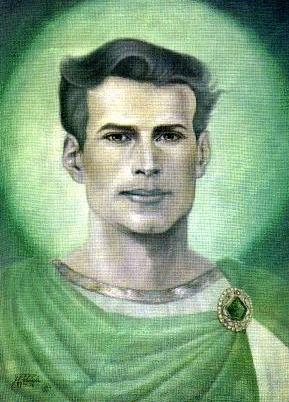
The Ascended Master SANAT KUMARA is a Hierarch of VENUS.
Since then SANAT KUMARA has visited PLANET EARTH and SHAMBALLA often.SANAT KUMARA is sanskrit and it means"always a youth". 2.5 million years ago during earth's darkest hour, SANAT KUMARA came here to keep the threefold flame of Life on behalf of earth's people. After Sanat Kumara made his commitment to come to earth 144.000 souls from Venus volunteered to come with him to support his mission.Four hundred were sent ahead to build the magnificent retreat of SHAMBALLA on an island in the Gobi Sea.Taj Mahal - Shamballa in a smaller scaleSanat Kumara resided in this physical retreat, but he did not take on a physical body such as the bodies we wear today. Later Shamballa was withdrawn to the etheric octave, and the area became a desert.Gobi DesertSANAT KUMARA is THE ANCIENT OF DAYS in The Book of DANIEL.DANIEL wrote (19, 20):"I beheld till the thrones were set in place, and THE ANCIENT OF DAYS did sit, whose garment was white as snow, and the hair of his head like the pure wool. His throne Always like the fiery flame and is wheels as burning fire. [His chakras.]"A fiery stream issued and came forth from before him.Thousand and thousands ministered unto him, and ten thousand times and ten thousand stood before him."I saw in the night visions, and, behold, one like THE SON OF MAN came with the clouds of heaven, and came to THE ANCIENT OF DAYS, and they brought him near before him."And there was given him dominion and glory and a kingdom, that all people, nations and languages should serve him.His dominion is an everlasting dominion, which shall not pass away, and his kingdom that which shall not be destroyed." The supreme God of Zoroastrianism, AHURA MAZDA is also SANAT KUMARA.In Buddhism, there is a great god known as BRAHMA SANAM-KUMARA, yet another name for SANAT KUMARA.SANAT KUMARA is one of the SEVEN HOLY KUMARAS.The twinflame of SANT KUMARA is VENUS, the goddess of LOVE and BEAUTY.In 1956, SANAT KUMARA returned to Venus, and GAUTAMA BUDDHA is now LORD OF THE WORLD and SANAT KUMARA is REGENT LORD OF THE WORLD.SANAT KUMARA`s keynote is the main theme of Finlandia by SIBELIUS.
The Ascended Master Hilarion Healing and Truth
The Ascended Master Hilarion - Healing and Truth
The Ascended Master of the Healing Ray
The ascended master Hilarion, the Chohan,1 or Lord, of the Fifth Ray of Science, Healing and Truth, holds a world balance for truth from his etheric retreat, known as the Temple of Truth, over the island of Crete. The island was an historic focal point for the Oracle of Delphi in ancient Greece.We know few of this master’s incarnations, but the three most prominent are as the High Priest of the Temple of Truth on Atlantis; then as Paul, beloved apostle of Jesus; and as Hilarion, the great saint and healer, performer of miracles, who founded monasticism in Palestine. Embodied as Saul of Tarsus during the rise of Jesus’ popularity, Saul became a determined persecutor of Christians, originally seeing them as a rebellious faction and a danger to the government and society. Saul consented to the stoning of Stephen, a disciple of Jesus, failing to recognize the light in this saint and in the Christian movement.jesus had already resurrected and ascended2 when he met Saul on the road to Damascus. And what an electrifying meeting that was! “It is hard for thee to kick against the pricks,”3 Jesus uttered to an awestruck Saul. Blinded by the light that surrounded the form of Jesus, Saul crumpled to the ground. Not only his body but his pride was taken down a few notches that day.This was the most famous of Christian conversions, whereupon Saul became the mightiest of the apostles. Saul took the name Paul and resolved to spread the word of truth throughout the Mediterranean and the Middle East. Paul had inwardly remembered his vow to serve the light of Christ—a vow that he had taken before his current incarnation. Three years after conversion, Paul spent another three years in seclusion in the Arabian Desert where he was taken up into Jesus’ etheric retreat. Paul did not ascend in that life due to his torturing of Christians earlier in that embodiment. In his very next lifetime, Paul was born to pagan parents in 290 A.D. They resided in the same geographical region in which he had lived as Paul in his previous lifetime. As a young boy, Hilarion was sent to Alexandria to study. During this time of study, he heard the gospel and was converted to Christianity.His greatest desire was to be a hermit—to spend his time fasting and praying to God in seclusion. So he divided his fortune among the poor and set out for the desert near Gaza. He spent twenty years in prayer in the desert before he performed his first miracle. God, through him, cured a woman of barrenness. And his healing ministry began.Soon Hilarion was sought out by hundreds who had heard of his miraculous cures and ability to exorcise demons. In 329 A.D., with a growing number of disciples assembling around him, he fled to Egypt to escape the constant flow of people seeking to be healed from all manner of diseases. His travels brought him to Alexandria again, to the Libyan Desert and to Sicily.But his miracles did not only include healings. Once when a seacoast town in which he was staying was threatened with a violent storm, he etched three signs of the cross into the sand at his feet then stood with hands raised toward the oncoming waves and held the sea at bay.Hilarion spent his last years in a lonely cave on Cyprus. He was canonized by the Catholic Church and is today known as the founder of the anchorite life, having originated in Palestine. To this day, those known as anchorites devote themselves to lives of seclusion and prayer. Hilarion ascended at the close of that embodiment. Hilarion, as an ascended master, speaks to us today of the power of truth to heal the souls of men, delivering his word through The Hearts Center’s Messenger, David Christopher Lewis. Current teachings released from Hilarion include the following:
·On the power of healing: Hilarion teaches his students that “[t]he power of healing is within your Solar Source.” He gives his students “an impetus, a spiral of light that you may fulfill your mission…” and exhorts them to “use this spiral of light for the benefit of sentient beings”. —July 2008
·On the power of joy: Hilarion encourages us to “experience the pulsation of joy” and shows each of us the joyous outcome of our life, which is “a life lived in joy.” He assures us, “I will always lead you to your freedom to be joy”. —June 2008
·On the love of truth: Hilarion teaches that the love of truth will enable us to see clearly the light that is within us. He teaches that instead of criticizing, we must go within and eliminate the particles of untruth within ourselves. —February 2008
·On the action of solar light: Hilarion delivers a greater action of solar light to help release all past awareness of lives lived outside divine awareness. He explains his ongoing mission over many lifetimes—to heal by the power of each soul’s recognition of the truth of her own divinity—and pronounces, “I am the messenger of healing and joy to all. May your life as a God-realized solar being be bright-shining ever with the aura of the truth who you are in my heart.” —March 14, 2008
1.“Chohan” is a Sanskrit word for “chief” or “lord.” A chohan is the spiritual leader of great attainment who works with mankind from the ascended state. There are seven chohans for the earth—El Morya, Lanto, Paul the Venetian, Serapis Bey, Hilarion, Nada and Saint Germain.back to Chohan…
2.The ascension is complete liberation from the rounds of karma and rebirth. In the ascension process, the soul becomes merged with her Solar Presence, experiencing freedom from the gravitational, or karmic, pull of the Earth and entering God’s eternal Presence of divine love. Students of the ascended masters work toward their ascension by studying and internalizing the teachings, serving life, and invoking the light of God into their lives. Their goal as they walk the earth is the cultivation of a relationship with God that becomes more real, more vital with each passing day.back to ascended…
3.Acts 9:5 back to kick against the pricks…
The Ascended Master Saint Germain
The Ascended Master Saint Germain
I have stood in the Great Hall in the Great Central Sun. I have petitioned the Lords of Karma to release Dispensation after Dispensation for the Sons and Daughters of God and, yes, for the Torch Bearers of The Temple. Countless times I have come to your assistance with a release of Violet Flame sufficient to clear all debris from your consciousness. Numberless times I have engaged the Love of my Heart to embrace you, to comfort you, to assist you when you have not known which way to turn.
"I merely ask you to keep the watch, to hold fast to the Heart Flame of your own God Presence, to understand that your first allegiance is to the Mighty I AM. That you have no other Gods before the I AM THAT I AM.
through the Anointed Representative®, Carolyn Louise Shearer, February 14, 2007, Tucson, Arizona U.S.A. (10)
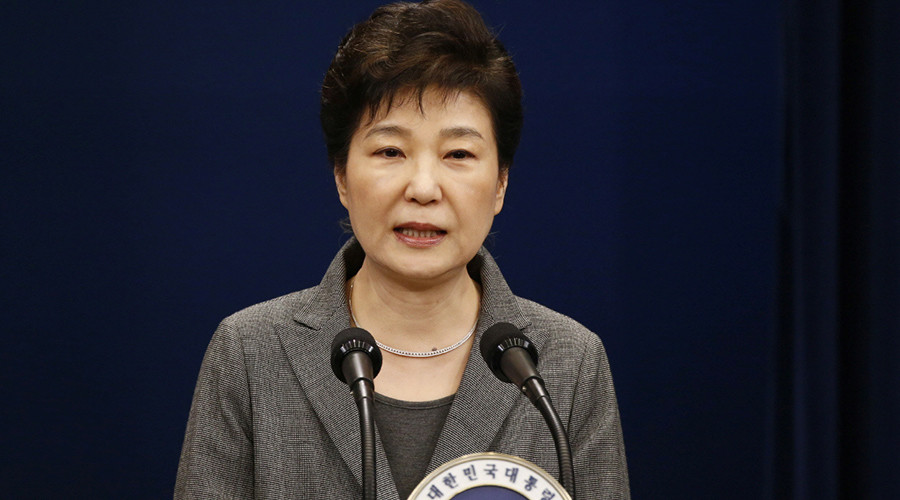
S. Korea parliament impeaches President Park over corruption scandal
S. Korea parliament impeaches President Park over corruption scandal
And how, if at all, is this impeachment scandal to affect the 'Northeast Asian security dynamics'? m.l.p.
"...The ratification of the KORUS-FTA takes on particular
importance as an affirmation of the relationship in light of strategic
challenges the U.S.-ROK alliance will face in 2012 and beyond.
With presidential elections in Russia, Taiwan, the
United States, and South Korea, as well as the leadership transitions
taking place in China and North Korea, 2012 may bring unprecedented
changes that seriously affect Northeast Asian security dynamics. With
the threat of a double-dip global economic recession on the horizon, a
strong, comprehensive, and future-oriented alliance is needed as the
security linchpin for the region.
One of President Obama's primary security
objectives is to build stronger alliances with Asian and European
countries, and he has made concrete progress with Seoul. The two sides
have stepped up joint military drills and boosted the deterrent power
Washington extends to its allies in the region. They have also agreed to
postpone the date of the transfer of wartime operational control from
2012 to 2015. Strong U.S. support played a decisive role in South Korea
becoming the host nation for the 2010 G20 Summit and the 2012 Nuclear
Security Summit. The allies have collaborated as indispensable partners
in Iraq, Afghanistan, and other parts of the world to further global
peace and security...." see the rest of the October 2011 article below. m.l.p.
The South Korean parliament has endorsed a motion to impeach
President Park Geun-hye over a scandal involving her long-time
confidante Choi Soon-sil, who has been indicted on bribery charges. The
motion is yet to be approved by the Constitutional Court.
Of the 300-member
parliament, 234 lawmakers approved the impeachment, with 56 others
voting against, seven votes deemed invalid and two more abstentions.
In
a few hours, Park’s presidency will be suspended, as soon as she
receives an official letter from the parliament. Prime Minister Hwang
Kyo-ahn will become the interim leader afterwards.
The suspension
is set to last for 180 days, with the Constitutional Court set to review
the impeachment and decide if it was justified. Park, 64, is the
daughter of former South Korean military leader Park Chung-hee. The
situation was brought about because Park allegedly shared classified
documents with Choi, and assisted in extortion of some $70 million from
corporate giants such as Samsung, Hyundai and LG.
South
Korean President Park Geun-hye congratulated Donald Trump on being elected president and said she hopes the countries continue to
cooperate. (Bae Jae-man/Yonhap via AP)Park
Geun-hye, the president of South Korea, said she hopes the United States
continues to cooperate with her country after the election of Donald
Trump “to address pending issues, including the North Korea issue.”
Park
sent “sincere congratulations” to Trump who won “based on the support
of the American people for his experience and leadership,” according to a
statement from a presidential spokesperson.
“The Government of
the Republic of Korea, upon Mr. Trump’s election, will continue to
closely cooperate with the next U.S. administration for the peace and
prosperity in the Korean Peninsula and Northeast Asia region, as well as
the world, through further deepening and developing the ROK-U.S.
alliance,” the statement said.
In May, North Korean state media outlet DPRK published an editorial that called Trump a “wise politician.”
“There
are many positive aspects to Trump’s ‘inflammatory policies,’ ” the
author of the article wrote, according to a translation from NK News. “Trump
said he will not get involved in the war between the South and the
North, isn’t this fortunate from North Korea’s perspective?”
In an interview with The Washington Post’s editorial board in March,
Trump argued that the U.S. defense deal with South Korea was not fair,
adding, “We’re reimbursed a fraction of what this is all costing.”
In a subsequent interview with the New York Times,
Trump had suggested that he would withdraw U.S. troops from South Korea
if elected, noting that Seoul may need to build its own nuclear weapons
to protect itself.
Trump then told Reuters in May
that he would be willing to speak to North Korean leader Kim Jong
Un. “I would speak to him, I would have no problem speaking to him,” he
said.
The State of the U.S.-ROK Alliance
Current Issues in U.S.-ROK Relations
Author: Han Sung-joo, Former Foreign Minister, Republic of Korea
Publisher
Council on Foreign Relations Press Release Date
October 2011
Republic of Korea (ROK) president Lee Myung-bak arrived in
Washington this week for a state visit with President Barack Obama. This
U.S.-ROK summit meeting comes as the legislatures of both countries are
in the final stages of approving the Korea-U.S. Free Trade Agreement
(KORUS-FTA). The ratification of the KORUS-FTA takes on particular
importance as an affirmation of the relationship in light of strategic
challenges the U.S.-ROK alliance will face in 2012 and beyond.
With presidential elections in Russia, Taiwan, the
United States, and South Korea, as well as the leadership transitions
taking place in China and North Korea, 2012 may bring unprecedented
changes that seriously affect Northeast Asian security dynamics. With
the threat of a double-dip global economic recession on the horizon, a
strong, comprehensive, and future-oriented alliance is needed as the
security linchpin for the region.
One of President Obama's primary security
objectives is to build stronger alliances with Asian and European
countries, and he has made concrete progress with Seoul. The two sides
have stepped up joint military drills and boosted the deterrent power
Washington extends to its allies in the region. They have also agreed to
postpone the date of the transfer of wartime operational control from
2012 to 2015. Strong U.S. support played a decisive role in South Korea
becoming the host nation for the 2010 G20 Summit and the 2012 Nuclear
Security Summit. The allies have collaborated as indispensable partners
in Iraq, Afghanistan, and other parts of the world to further global
peace and security.
The U.S.-ROK alliance has grown beyond a
traditional security relationship and now encompasses shared political,
economic, and cultural values. However, the alliance still faces several
significant challenges: North Korea, domestic politics, economics, and
geopolitics.
The North Korean threat continues to be the
fundamental basis for the security relationship. Yet the growing
unconventional nature of this threat (i.e., nuclear program, military
provocations, and chemical/biological weapons) challenges efforts to
find coordinated solutions to these problems. Even though the two
governments have closely coordinated their policies toward North Korea
in recent years, it is inevitable that one or the other is likely to be
more hard-line vis-à-vis North Korea.
The serious nature of the threat and the increasing
frequency and severity of North Korean provocations make it even more
necessary to build a stronger comprehensive security alliance, one that
assures deterrence and can effectively deal with proliferation issues
(i.e., North Korea, Iran, Syria, and Myanmar). The dilemma of strongly
reacting to North Korean intransigence on the one hand and containing
the possibility of conflict escalation on the other constitutes a
particular challenge for U.S.-ROK alliance coordination.
Another facet of the North Korea problem is the
possibility of a "contingency" that may result from an implosion or some
other case of serious instability there and require the intervention of
outsiders. Given the combination of the North Korean arsenal that
includes both nuclear weapons and missiles, and the possibility of a
humanitarian disaster, the allies must prepare for a possible
contingency situation in North Korea, including policy coordination
regarding the necessity, feasibility, desirability, and nature of their
intervention. This scenario will also require consultation,
understanding, and coordination with other powers such as China, Russia,
and Japan.
A second challenge for the U.S.-ROK alliance is
domestic politics. Even though support levels for the U.S.-ROK alliance
have been climbing in both countries, some people/experts/parts of the
public still have doubts about the need for the alliance, and the cost
of maintaining it may be deemed too high. In South Korea, depending on
various circumstances, anti-American and anti-alliance sentiments may
flare up again. In the United States, the U.S.-ROK alliance could become
the unintended victim of a budget squeeze and/or isolationist
sentiments arising there.
The third challenge is the budget problem that
arises in an atmosphere of fiscal constraint. Both countries, but
particularly the United States, are facing economic and financial
difficulties. Belt-tightening military budgets are inevitable. This
situation will force both sides to deal with issues of cost-sharing and
securing resources for military hardware as well as financing the
planned relocation of U.S. troops in South Korea.
Finally, there is the geopolitical challenge posed
by a "rising China." In the past, China saw a strong relationship
between South Korea and the United States as desirable because it helped
prevent a Japanese military buildup. But in recent years, China has
exhibited misgivings over South Korea's close alliance with the United
States, especially regarding naval exercises in the Yellow Sea and the
augmentation of South Korean military capabilities. The Republic of
Korea and the United States must convince China that their alliance will
actually be in China's interest by promoting the security, stability,
and prosperity of the region.
Though China wants North Korea denuclearized and
the Korean Peninsula free of military conflict, it would also like to
keep the North Korean regime afloat. Its collapse, China believes, could
mean instability on the Korean Peninsula, the outflow of North Korean
refugees into northeastern China, and the loss of what China considers a
buffer separating it from U.S.-friendly South Korea. China in recent
years has been playing a dual role, shielding North Korea diplomatically
and aiding it economically while restraining it from further
provocative actions and inducing it to return to the Six Party Talks.
The United States and South Korea must persuade China to apply greater
pressure on North Korea to denuclearize and refrain from military
provocations.
In sum, to build a stronger alliance that will lay
the cornerstone of peace and security in Northeast Asia in 2012 and
beyond, President Lee and President Obama must tackle several difficult
challenges. They should form working groups or initiate dialogues where
solutions and specific steps for implementation can be formulated. Both
sides must recognize and expand on their mutual interests, since shared
values are as important as geopolitical interests in sustaining the
alliance. Seoul and Washington should let shared values like democracy,
prosperity, peace, and security—globally as well as regionally—serve as
strong foundations for the further development of the alliance.