May, Monday 27th., 2019China Hails Modi Victory - This Is Why
May, Monday 27th., 2019
China Hails Modi Victory - This Is Why
The first Chinese commentaries have appeared on the outcome of the general elections in India.
The timing is important, since the counting of votes is yet to take
place in India. Yet, Chinese commentaries have presumed that the result
cannot be contrary to the trend that the exit polls have indicated -
that PM Modi is securing a renewed mandate to head another government.
This presumption is broadly in line with the estimations by Chinese commentators in the recent weeks and months. The Chinese commentators have not hidden their acclamation of the Modi government. Contrary
to the common opinion among Indians that the Modi government showed a
pro-US tilt in foreign policies, the Chinese (and Russian) opinion has
been generally positive about Indian policies through the past 5 years.
China was not particularly perturbed that India has a
deepening engagement with the US or that India’s non-alignment is in any
great danger. This opinion was reinforced following Modi’s
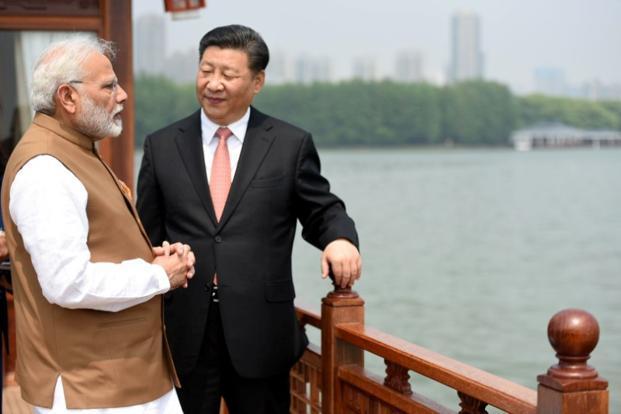
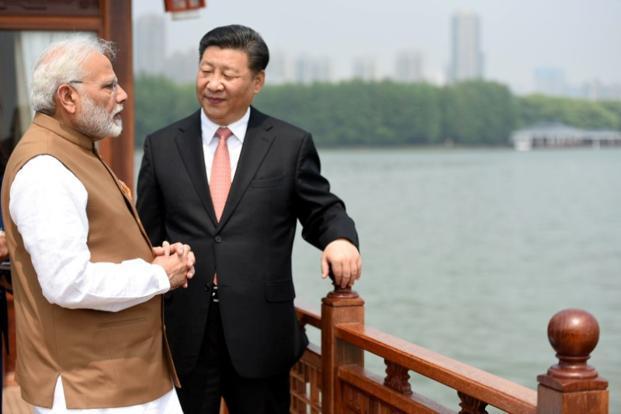
informal summit with the Chinese President Xi Jinping last year in April
in Wuhan and with Russian President Vladimir Putin a month later in
Sochi. It stands to reason that both Xi and Putin have sized up Modi
from very close, intimate quarters and decided that they could do
business with him even in new Cold War conditions. In fact, in an extraordinary gesture of camaraderie, the
Kremlin announced the decision to confer Russia’s most prestigious
national award to Modi after the Indian election got under way.
A commentary by the “Observer” in the Chinese communist party
newspaper Global Times on May 20 is self-revealing in its display of a
sense of relief that Modi will be at the helm of affairs in Delhi at a
critical juncture in the geopolitics of the region. The following
excerpts will be of interest:
1. “Modi’s reelection will further stabilise and improve China-India
relations. During Modi’s term of office, India’s relations with China
show the trend of steady development. The meeting between President Xi
Jinping and Modi in 2018 opened a new chapter for the two countries’
bilateral ties and laid the foundation for future relations.”
2. Admittedly, Modi’s actions have also triggered controversy in
China — such as his initial bonhomie with the Tibetan leadership based
in Dharamsala, his three visits to Arunachal Pradesh or the rising trend
of Hindu nationalism (which “somewhat contained Modi’s policies towards
China.) But these were actions with an eye of India’s domestic politics
with the aim to “drum up support” for the Bharatiya Janata Party, while
“generally speaking, Modi’s policies have been sound.”
3. “Modi separated political conflicts from economic cooperation, a
wise move that brings reciprocal results to both countries (India and
China). Modi knows that tense relations with China are not in line with
India’s interests.”
4. “India joined the Asian Infrastructure Investment Bank although
the US and Japan strongly opposed… India has stuck to its policy of
non-alignment and did not adjust its policies toward China according to
Washington’s strategy for Beijing. These are all positive diplomatic
achievements of the Modi administration.”
5. Looking ahead, “these policies will continue if Modi is
successfully re-elected… Modi’s reelection benefits the continuity of
his policies toward China and the two countries’ mutual trust.”
6. “India’s dispute with Pakistan is an important factor that
influences China-India relations. China always encourages the two
countries to build mutual trust through cooperation in trade, economies,
anti-terrorism and other areas. As Pakistan and India are both members
of the Shanghai Cooperation Organization, they will have more
cooperation within the framework.”